Kauai’s wild animals are some of the most fascinating on Earth. Right away, you might not expect an island to house such a diverse group of creatures, yet Kauai’s wild animals in Kauai stand out for their uniqueness and evolutionary history. Stranded far from any mainland, this Hawaiian island developed wildlife that exists nowhere else on the planet. From graceful birds on forested slopes to marine mammals splashing offshore, the wildlife here is both magical and fragile.
Because Kauai’s ecosystem is isolated, many species evolved without typical predators, giving visitors the rare chance to see creatures like the nēnē goose, Hawaiian monk seal, and tropical seabirds thriving in natural habitats. However, introduced species and habitat threats constantly shape this delicate environment. In this article, we take you deep into Kauai’s wild world—covering scientific classification, habitat, behaviour, threats, and key conservation tips—so you can truly appreciate the island’s wild treasures while learning how to protect them.
|Learn about us: wild animals in maui
Scientific Classification of Wild Animals in Kauai
| Category | Example Species | Scientific Name | Status |
|---|---|---|---|
| Bird | Nēnē Goose | Branta sandvicensis | Endangered |
| Bird | Kauaʻi ʻElepaio | Chasiempis sclateri | Vulnerable |
| Marine Mammal | Hawaiian Monk Seal | Monachus schauinslandi | Critically Endangered |
| Dolphin | Bottlenose Dolphin | Tursiops truncatus | Least Concern |
| Marine Reptile | Hawksbill Turtle | Eretmochelys imbricata | Critically Endangered |
Endemic species evolved uniquely on the island, while others, like dolphins, travel through Kauai waters.
Physical Characteristics
Every wild animal in Kauai adapts differently to life on the Garden Isle:
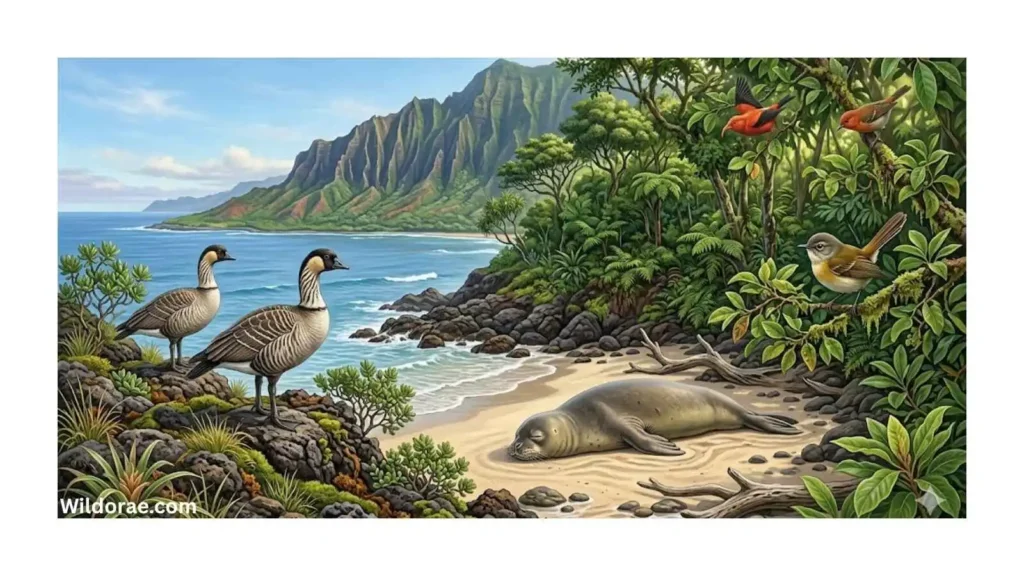
- Nēnē geese look regal with webbed yet reduced feet ideal for rocky land travel.
- Kauaʻi ʻElepaio birds show distinct gray-brown feathers with lighter underparts.
- Hawaiian monk seals are sleek and stout with whiskered faces, perfect for sunbathing.
- Dolphins have streamlined bodies to glide in warm Pacific waters.
- Turtles like the hawksbill have strong beaks and patterned shells for reef life.
Their forms reflect survival strategies in Kauai’s distinct land and ocean environments.
Habitat and Distribution
Kauai’s shape and isolation created multiple habitats:
- Rainforests and mountains house forest birds like the Kauaʻi ʻElepaio.
- Coastal beaches are key resting spots for monk seals and sea turtles.
- Open waters around the island attract dolphins and migrating humpback whales.
- Lowland grasslands and golf courses often host nēnē geese feeding on vegetation.
Kauai’s mosaic of habitats makes it possible to see vastly different wild animals in close proximity.
Diet and Hunting Behavior
Wild animals in Kauai display a range of feeding traits:
- Nēnē geese graze on leaves, seeds, and grasses.
- Hawaiian monk seals feed on fish, octopus, and crustaceans in shallow waters.
- Dolphins hunt schooling fish using echolocation.
- Turtles nibble on sponges and marine plants.
Their feeding habits align with the ecological niches available on land and sea, creating an intricate food web.
Reproduction and Lifespan
Wild animals in Kauai have distinct life histories:
- Nēnē geese nest on ground ledges or grasslands, with families staying together for long periods.
- Monk seals give birth on isolated beaches and nurse pups for weeks.
- Dolphins form social groups where calves stay with mothers for years.
- Turtles return to sandy beaches to lay eggs, often traveling long distances.
Lifespans vary widely: turtles may live decades, while seabirds often return to nesting grounds for years.
Behavior and Adaptations
Wild animals in Kauai have strange yet smart adaptations:
- Some birds evolved specialized beaks for specific flowers and insects.
- Marine mammals often haul out on beaches to rest during the heat of the day.
- Dolphins use social whistles and clicks to communicate and feed.
- The absence of big land predators historically allowed birds to nest with less fear.
These traits help them thrive in an isolated island setting.
Threats and Conservation Status
While beautiful, Kauai’s wildlife faces serious dangers:
- Invasive species such as feral pigs and cats disrupt native ecosystems and harm birds.
- Habitat loss due to development and erosion alters natural homes.
- Disease and mosquitoes have decimated native bird populations.
- Many species are listed as endangered or vulnerable due to these pressures.
Local agencies and conservation partners work tirelessly to protect and restore populations.
Interesting Facts
Here are cool wildlife nuggets:
- Kauai hosts more than 80 bird species, many endemic to the island.
- Some creatures once common, like the Kauaʻi ʻakialoa bird, are now extinct.
- Wild chickens seen island-wide are feral, not native.
- Humpback whales migrate past Kauai each winter.
These facts make exploring Kauai even more rewarding.
FAQs About Wild Animals in Kauai
1. What wild animals are native to Kauai?
Native wildlife includes the nēnē goose, monk seal, and rare forest birds like the Kauaʻi ʻElepaio.
2. Are there dangerous animals in Kauai?
Kauai has no big predators like lions or wolves; the main concerns are feral cats and jellyfish stings at beaches.
3. Can I see whales near Kauai?
Yes, humpback whales migrate here seasonally and are often seen offshore.
4. Why are Kauai’s native birds endangered?
Invasive species, disease, and habitat loss have driven declines.
5. How can visitors help conservation?
Stay on trails, avoid feeding wildlife, and report injured animals to local authorities.
Summary
Exploring wild animals in Kauai reveals a world shaped by isolation, evolution, and delicate ecological balances. The island’s birds, marine mammals, and unique reptiles and fish represent both marvels of nature and signs of fragility. Kauai offers visitors the rare chance to see species found nowhere else, but these treasures depend on careful conservation.
Despite threats from invasive species, disease, and human activities, dedicated efforts by local groups and wildlife experts help protect these precious animals. When you encounter Kauai’s wildlife, appreciating its beauty also means advocating for its survival.
Conservation Awareness
Every visitor and resident has a role to play in protecting Kauai’s wild animals. Stay informed, minimize your impact, and support conservation projects. By acting today, we ensure that tomorrow’s generations can witness Kauai’s incredible wildlife in all its natural wonder.