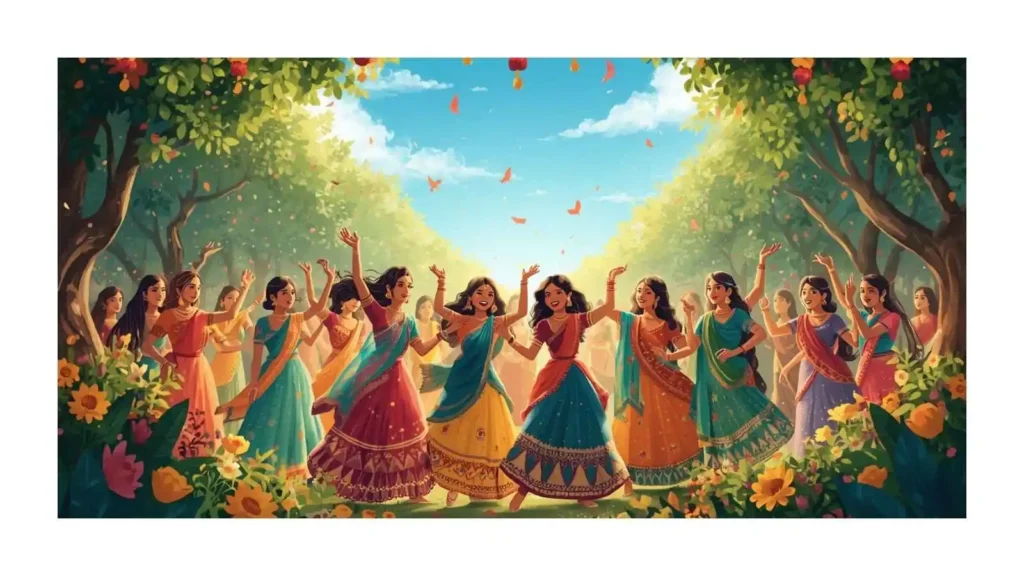
Across India’s colorful cultural landscape, the Teej Indian festival stands out as a joyful celebration of devotion, monsoon beauty, and marital harmony. Celebrated primarily by women, this traditional festival marks the arrival of the rainy season and honors the divine union of Lord Shiva and Goddess Parvati. Rich in folklore, rituals, music, and dance, the Teej Indian festival reflects centuries of cultural heritage while continuing to thrive in modern society.
|See also: where is lukla airport
Moreover, the festival serves as a social gathering that strengthens family bonds and preserves traditional customs. From elaborate fasting rituals to beautifully decorated swings hanging from lush green trees, Teej creates an atmosphere of happiness and spiritual reflection.
Quick Overview of the Teej Indian Festival
| Aspect | Details |
|---|---|
| Festival Name | Teej |
| Religion | Hinduism |
| Main Deity | Goddess Parvati |
| Celebrated In | India, Nepal, and South Asia |
| Season | Monsoon |
| Main Participants | Traditionally women |
| Purpose | Marital happiness, devotion, prosperity |
| Key Activities | Fasting, prayers, singing, dancing |
History and Origin of Teej Indian Festival
Ancient legends shape the celebration
The roots of the Teej Indian festival can be traced to ancient Hindu mythology. According to traditional beliefs, Goddess Parvati performed severe penance for many lifetimes to win Lord Shiva as her husband. Her unwavering dedication eventually pleased Shiva, leading to their sacred union.
Consequently, married women celebrate Teej to pray for the long life and well-being of their husbands. Unmarried women also participate, seeking a loving and virtuous life partner.
Furthermore, the festival symbolizes perseverance, faith, and the triumph of true devotion.
Types of Teej Celebrations
Different regions observe unique forms
India celebrates several variations of Teej, each with distinct customs and dates.
Hariyali Teej
Hariyali Teej marks the arrival of lush greenery during the monsoon season. Women wear green clothing and adorn themselves with traditional jewelry.
Kajari Teej
Observed mainly in northern India, Kajari Teej focuses on prayers for family prosperity and agricultural abundance.
Hartalika Teej
Hartalika Teej commemorates Goddess Parvati’s devotion and determination before marrying Lord Shiva. It is often considered the most spiritually significant form of Teej.
Cultural Significance of Teej Indian Festival
Deep traditions connect generations
The Teej Indian festival represents much more than a religious observance. It reflects cultural identity and community values.
Key symbolic meanings include:
- Marital harmony
- Family unity
- Female empowerment
- Spiritual devotion
- Seasonal renewal
- Gratitude toward nature
Additionally, Teej provides women with an opportunity to gather, celebrate friendships, and share cultural experiences.
Traditional Rituals and Customs
Rituals form the heart of the festival
The celebrations begin early in the morning with preparations for fasting and worship.
Common customs include:
- Applying intricate mehndi (henna)
- Wearing colorful traditional attire
- Singing folk songs
- Swinging on decorated swings
- Visiting temples
- Offering prayers to Goddess Parvati
- Participating in community gatherings
Furthermore, many women observe a strict fast, sometimes without water, as an act of devotion and discipline.
Traditional Attire and Decorations
Bright colors enhance the festive atmosphere
One of the most recognizable features of the Teej Indian festival is its vibrant fashion.
Women often wear:
- Green sarees
- Lehengas
- Glass bangles
- Gold jewelry
- Floral accessories
Decorations commonly include:
- Flower garlands
- Colorful umbrellas
- Decorative swings
- Rangoli patterns
- Traditional lanterns
As a result, entire communities become filled with festive energy and visual beauty.
Foods Associated with Teej
Special dishes enrich the celebration
Although many participants fast during the day, festive foods play an important role.
Popular Teej delicacies include:
- Ghewar
- Malpua
- Kheer
- Puri
- Halwa
- Laddoo
The sharing of sweets symbolizes affection, prosperity, and community bonding.
Benefits of Celebrating Teej
Traditional festivals offer meaningful advantages
The Teej Indian festival provides numerous social and emotional benefits.
Cultural Benefits
- Preserves heritage
- Promotes traditional arts
- Encourages intergenerational learning
Social Benefits
- Strengthens family relationships
- Builds community connections
- Encourages social participation
Spiritual Benefits
- Enhances devotion
- Promotes mindfulness
- Encourages gratitude
Consequently, Teej remains an important cultural institution despite changing lifestyles.
Safety Considerations During Teej
Responsible celebrations ensure enjoyment
While the festival is generally safe, certain precautions are helpful.
Health Tips for Fasting
- Consult a doctor if you have medical conditions.
- Stay hydrated before fasting begins.
- Avoid excessive physical exertion.
- Break the fast gradually.
Festival Safety
- Use secure swing installations.
- Monitor children during celebrations.
- Follow local event guidelines.
- Practice food hygiene.
Taking these simple measures can help participants enjoy a safe and meaningful festival experience.
Possible Side Effects of Strict Fasting
Awareness supports healthier participation
Although fasting is an important tradition, some individuals may experience:
- Fatigue
- Headaches
- Dizziness
- Dehydration
- Low energy levels
Therefore, elderly individuals, pregnant women, and people with health conditions should seek medical advice before observing rigorous fasts.
Practical Tips for Celebrating Teej
Small preparations improve the experience
To make the most of the Teej Indian festival, consider the following suggestions:
- Plan traditional attire in advance.
- Prepare fasting meals carefully.
- Learn traditional songs and dances.
- Participate in community events.
- Respect local customs and traditions.
- Stay hydrated when fasting permits.
- Capture memories through photographs.
These simple steps can make the celebration more enjoyable and meaningful.
Teej and Nature: A Monsoon Connection
Seasonal beauty plays a central role
Unlike many festivals, Teej has a strong connection with nature. The arrival of monsoon rains transforms landscapes into vibrant green environments.
The festival celebrates:
- Fresh rainfall
- Agricultural renewal
- Green vegetation
- Seasonal abundance
- Ecological harmony
This natural connection explains why greenery and floral decorations remain central symbols of Teej festivities.
Interesting Facts About Teej Indian Festival
Fascinating traditions continue today
- Teej is celebrated in several forms across India.
- Green is considered the festival’s signature color.
- Mehndi designs are an important part of preparations.
- Traditional folk songs vary by region.
- The festival honors Goddess Parvati’s devotion.
- Decorated swings symbolize joy and freedom.
- Nepal also celebrates Teej with great enthusiasm.
Festival Celebration Flow Diagram
Preparation
      ↓
Traditional Attire
      ↓
Mehndi Application
      ↓
Fasting & Prayers
      ↓
Temple Visits
      ↓
Songs & Dancing
      ↓
Community Gathering
      ↓
Breaking the Fast
      ↓
Festive Feast
Summary
The Teej Indian festival is a cherished cultural and religious celebration that combines devotion, tradition, and seasonal joy. Honoring the sacred bond between Lord Shiva and Goddess Parvati, the festival brings communities together through fasting, prayer, music, dance, and festive gatherings. Its strong connection to nature, family values, and cultural heritage continues to make Teej one of the most beloved festivals in South Asia.
Conservation Awareness Message
As we celebrate festivals that honor nature and seasonal change, let us also protect the environment that inspires them. Plant trees, reduce waste, conserve water, and support sustainable practices so future generations can continue enjoying the beauty of monsoon traditions and cultural celebrations.