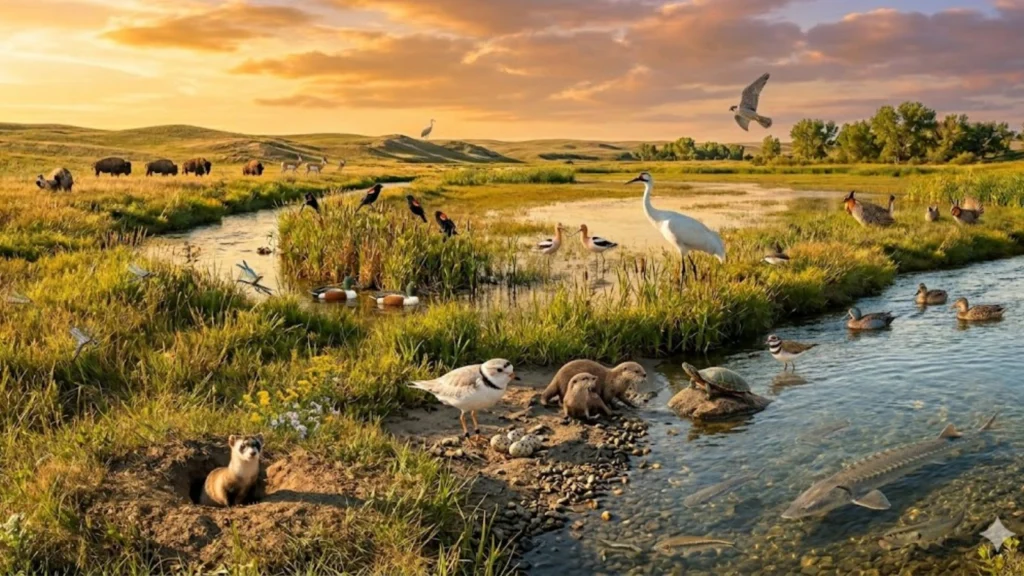
Nebraska may be famous for its sweeping prairies and agricultural landscapes, but it is also home to a remarkable variety of wildlife. From grassland mammals to migratory birds and river-dwelling fish, the state’s ecosystems support many unique species. Unfortunately, several of these animals are now considered endangered or threatened due to habitat loss, environmental changes, pollution, and human activity. As natural habitats continue to shrink, wildlife populations struggle to survive. Understanding the challenges faced by endangered animals in Nebraska is essential for protecting biodiversity and maintaining healthy ecosystems. This guide explores some of the state’s most vulnerable species, the reasons behind their decline, and the ongoing efforts to secure their future.
|Learn more: Wildlife in Mount Everest
List of Endangered Animals in Nebraska
Here are some of the most notable endangered and federally protected animals found in Nebraska:
Mammals
- Black-Footed Ferret
- Northern Long-Eared Bat
- Gray Bat
Birds
- Whooping Crane
- Piping Plover
- Interior Least Tern
- Red Knot
- Eskimo Curlew
Fish
- Pallid Sturgeon
- Topeka Shiner
- Niangua Darter
Insects
- American Burying Beetle
Reptiles
- Eastern Massasauga Rattlesnake
Freshwater Mussels
- Northern Riffleshell Mussel
- Pink Mucket Mussel
Most Famous Endangered Animals in Nebraska
- Black-Footed Ferret
- Whooping Crane
- Piping Plover
- Interior Least Tern
- Pallid Sturgeon
- American Burying Beetle
- Northern Long-Eared Bat
These species are frequently highlighted in wildlife conservation programs because their populations have declined due to habitat loss, river modification, pollution, climate change, disease, and human disturbance.
Why Nebraska’s Wildlife Matters
Nebraska’s landscapes include prairies, wetlands, forests, rivers, and the famous Sandhills region. These habitats support thousands of species and contribute to ecological balance.
Wildlife plays important roles such as:
- Pollinating plants
- Controlling insect populations
- Dispersing seeds
- Recycling nutrients
- Maintaining food chains
When a species disappears, the effects can ripple throughout an entire ecosystem.
Whooping Crane
The Whooping Crane is one of North America’s most recognizable endangered birds. Known for its striking white feathers and impressive height, this species migrates through Nebraska each year.
Why It Is Threatened
Historically, Whooping Cranes suffered from habitat destruction and unregulated hunting. Today, the main threats include:
- Wetland degradation
- Power line collisions
- Drought conditions
- Human disturbance
Conservation Progress
Protected migration routes and wetland restoration projects have helped stabilize populations. Although recovery remains ongoing, conservation efforts have significantly improved the species’ outlook.
Piping Plover
The Piping Plover is a small shorebird that depends on sandy beaches and riverbanks for nesting.
Major Threats
This species faces numerous challenges, including:
- Habitat loss
- Recreational disturbance
- Flooding of nesting sites
- Predation by larger animals
Protection Efforts
Wildlife managers often close nesting areas during breeding seasons and monitor populations to improve nesting success.
Interior Least Tern
Another endangered bird found in Nebraska is the Interior Least Tern. This small bird nests along rivers and sandbars.
Population Challenges
Changes to river systems have reduced suitable nesting locations. Additional threats include:
- River engineering projects
- Human activity
- Nest predators
- Severe weather
Conservation programs focus on preserving natural river habitats and protecting breeding colonies.
Pallid Sturgeon
The Pallid Sturgeon is one of the oldest fish species in North America. Sometimes called a “living fossil,” it has survived for millions of years.
Why It Is Endangered
The Missouri River once provided ideal habitat for this fish. However, human modifications have altered natural conditions.
Key threats include:
- Dam construction
- Reduced water flow
- Habitat fragmentation
- Poor spawning conditions
Recovery Programs
Fish hatcheries and stocking initiatives help supplement wild populations while researchers study long-term recovery strategies.
American Burying Beetle
Not all endangered animals are large or well-known. The American Burying Beetle is an important insect species that contributes to ecosystem health.
Ecological Importance
This beetle helps break down animal remains, returning nutrients to the soil and supporting natural decomposition processes.
Causes of Decline
Several factors have contributed to its population decrease:
- Habitat loss
- Artificial night lighting
- Reduced food resources
- Environmental disturbances
Scientists continue monitoring populations and restoring suitable habitat areas.
Northern Long-Eared Bat
Bats play a crucial role in controlling insect populations, yet many species face serious threats.
White-Nose Syndrome
The greatest danger to the Northern Long-Eared Bat is White-Nose Syndrome, a fungal disease that affects hibernating bats.
Other threats include:
- Forest loss
- Habitat fragmentation
- Disturbance of roosting sites
Conservation Measures
Researchers protect critical habitats and monitor caves, forests, and migration routes to help support remaining populations.
Black-Footed Ferret
The Black-Footed Ferret represents one of the most remarkable wildlife recovery stories in North America.
Nearly Lost Forever
By the late twentieth century, this species was believed extinct in the wild. A small surviving population was later discovered, allowing conservationists to begin recovery efforts.
Ongoing Challenges
Despite progress, ferrets continue to face obstacles:
- Disease outbreaks
- Habitat loss
- Declining prairie dog colonies
- Limited genetic diversity
Captive breeding and reintroduction programs remain essential for their survival.
The Sandhill Ecosystem and Wildlife Protection
Nebraska’s Sandhills region contains one of the largest intact grassland ecosystems in North America. This area supports numerous endangered and threatened species.
The region provides:
- Nesting grounds for birds
- Habitat for mammals
- Wetland ecosystems
- Native grasslands
Protecting the Sandhills helps safeguard many vulnerable species simultaneously.
Major Threats Facing Endangered Animals in Nebraska
Habitat Conversion
Agricultural expansion and development often replace natural habitats with roads, buildings, and farmland.
Climate Change
Changing temperatures affect migration patterns, breeding seasons, and food availability.
Water Resource Changes
Many species depend on healthy rivers and wetlands. Water diversion projects can dramatically alter these ecosystems.
Pollution
Chemical runoff, litter, and industrial waste can negatively affect wildlife health and reproduction.
Invasive Species
Non-native plants and animals may outcompete native species for food and habitat.
Conservation Efforts Across Nebraska
Wildlife agencies and conservation groups work together to protect endangered species through various initiatives.
Habitat Restoration
Restoring wetlands, prairies, and river systems provides critical resources for wildlife.
Scientific Research
Researchers collect data on animal populations, breeding success, and migration patterns.
Public Education
Educational programs help communities understand the importance of wildlife conservation.
Species Recovery Plans
Targeted recovery strategies focus on increasing populations and improving habitat conditions.
How Residents Can Support Wildlife Conservation
Everyone can contribute to protecting endangered animals.
Plant Native Species
Native plants provide food and shelter for local wildlife.
Reduce Chemical Use
Limiting pesticides and herbicides can benefit insects, birds, and aquatic species.
Protect Natural Areas
Supporting conservation projects helps preserve valuable habitats.
Respect Wildlife
Observing animals from a distance reduces stress and disturbance.
Participate in Citizen Science
Reporting wildlife sightings helps researchers track population trends.
The Future of Endangered Animals in Nebraska
While many species continue to face serious challenges, conservation success stories demonstrate that recovery is possible. Improved habitat management, stronger environmental protections, and public awareness have helped several endangered animals increase their numbers.
Long-term success will require continued cooperation between government agencies, conservation organizations, landowners, and local communities. By protecting habitats today, Nebraska can ensure that future generations inherit a landscape rich in wildlife and natural diversity.
Frequently Asked Questions
Q1. What is the rarest endangered animal in Nebraska?
The Black-Footed Ferret is considered one of the rarest mammals associated with Nebraska’s grassland ecosystems.
|See also: Best places to see wildlife in yellowstone
Q2. Why are animals becoming endangered in Nebraska?
Habitat loss, climate change, pollution, disease, and human activity are the primary causes.
Q3. Are endangered animals protected by law?
Yes. Federal and state laws provide protection for many endangered species and their habitats.
Q4. Which birds in Nebraska are endangered?
The Whooping Crane, Piping Plover, and Interior Least Tern are among the most notable endangered birds linked to Nebraska.
Q5. How does climate change affect wildlife?
Climate change can alter migration routes, food sources, breeding cycles, and habitat availability.
Q6. Can endangered species recover?
Yes. With proper conservation measures, habitat restoration, and public support, many species can rebuild their populations.
Conclusion
Endangered animals in Nebraska face numerous challenges, yet there is reason for optimism. From the towering Whooping Crane to the elusive Black-Footed Ferret, these species represent the rich natural heritage of the state. Conservation programs, habitat restoration projects, and public involvement have already made a meaningful difference. Continued commitment to protecting wildlife and preserving natural ecosystems will be crucial for ensuring these remarkable animals remain part of Nebraska’s landscape for generations to come. By understanding their struggles and supporting conservation efforts, everyone can help safeguard the future of Nebraska’s endangered wildlife.