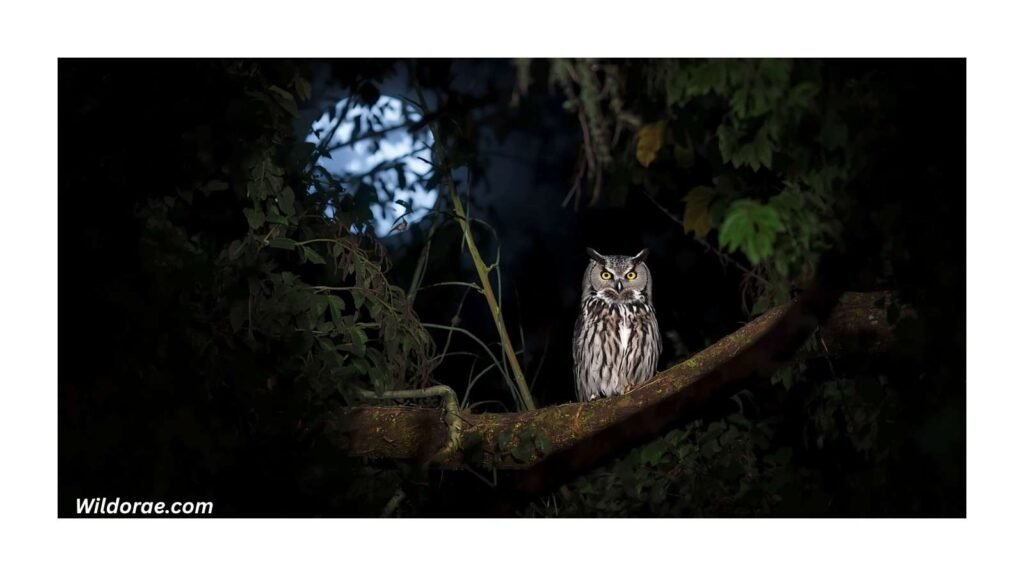
Another world comes to life when meadows, deserts, and forests are covered in darkness. In the wild, nocturnal creatures emerge from their hiding spots to hunt, converse, and explore beneath the sky. Instead of using daytime vision, these amazing animals rely on keen senses, stealth, and special adaptations.
Nighttime wildlife exhibits remarkable survival skills, from bats employing echolocation to owls flying silently across the night sky. People can better appreciate biodiversity and comprehend how ecosystems maintain equilibrium after sunset by learning about these creatures.
|SEE LEARN MORE: Belize wildlife at night
Scientific Classification
Unlike a single species, nocturnal animals in the wild belong to many different groups.
| Group | Examples |
|---|---|
| Mammals | Bats, foxes, raccoons |
| Birds | Owls, nightjars |
| Reptiles | Geckos, some snakes |
| Amphibians | Toads, tree frogs |
| Insects | Moths, crickets |
Their classifications vary, but they share one important trait: peak activity at night.
Physical Characteristics
Many nocturnal species possess specialized features that improve nighttime survival.
Common adaptations include:
- Large eyes that gather more light.
- Sensitive ears for detecting movement.
- Powerful noses for tracking scents.
- Camouflaged fur or feathers.
- Soft footpads or silent wings for stealth.
Owls, for example, fly quietly because of specially shaped feathers.
Habitat and Distribution
Nocturnal animals in the wild inhabit nearly every continent except Antarctica.
Typical habitats include:
- Dense forests
- Open grasslands
- Mountain regions
- Wetlands
- Deserts
- Tropical rainforests
- Coastal ecosystems
Different species occupy environments that match their food sources and shelter needs.
Diet and Hunting Behavior
Night offers excellent hunting opportunities because temperatures drop and competition often decreases.
Depending on the species, nocturnal animals may eat:
- Rodents
- Insects
- Fruits
- Nectar
- Fish
- Small reptiles
- Seeds
Predators such as owls and wild cats depend on stealth, while bats use echolocation to capture flying insects.
Reproduction and Lifespan
Breeding habits vary among species.
Some mammals give birth once a year, while many insects reproduce rapidly. Parents often hide nests or dens to protect vulnerable offspring from predators.
Lifespans differ widely:
- Small rodents: 2–4 years
- Many owls: 10–20 years
- Some bats: over 20 years
- Large carnivores: more than 15 years in suitable conditions
Behavior and Adaptations
Nighttime survival requires remarkable biological innovations.
Key adaptations include:
- Enhanced night vision
- Echolocation in bats
- Heat-sensitive organs in certain snakes
- Excellent hearing
- Acute smell
- Silent movement
- Energy conservation during daylight hours
These abilities allow animals to locate prey while avoiding danger.
|SEE ALSO: Wildlife on the oregon trail
Threats and Conservation Status
Although darkness provides protection, many nocturnal species face serious challenges.
Major threats include:
- Habitat destruction
- Artificial light pollution
- Climate change
- Road traffic
- Illegal hunting
- Pesticide exposure
Conservation programs that preserve habitats and reduce unnecessary nighttime lighting can help protect these valuable species.
Interesting Facts
- Bats are the only mammals capable of sustained flight.
- Many owls can rotate their heads up to 270 degrees.
- Some desert animals become nocturnal to avoid extreme daytime heat.
- Certain geckos communicate through chirping sounds.
- Fireflies use flashes of light to attract mates after dark.
Safety and Practical Tips
If you observe nocturnal animals in the wild, follow responsible wildlife practices:
- Keep a respectful distance.
- Avoid using bright flashlights directly on animals.
- Never feed wild creatures.
- Stay on marked trails.
- Reduce noise to prevent disturbance.
Responsible observation supports conservation and minimizes stress on wildlife.
Summary
In the wild, nocturnal animals are vital to ecosystems because they manage pests, pollinate plants, spread seeds, and preserve food webs. They are ideal for life after sunset because of their unique sensitivities and actions.
Gaining knowledge about these amazing animals promotes respect for biodiversity and aids in global efforts to save natural environments.
People also ask
- How do animals say hello?
Animals greet each other through sounds, body language, scents, or touch, depending on the species. - What are 20 nocturnal animals?
Examples include owls, bats, raccoons, foxes, hedgehogs, opossums, badgers, skunks, aardvarks, bush babies, civets, kinkajous, slow lorises, geckos, moths, crickets, toads, tree frogs, porcupines, and flying squirrels. - What animal loves honey?
Bears, especially black bears and brown bears, are famous for eating honey along with bee larvae. - What is the most anti-social animal?
Leopards are often considered highly solitary, spending most of their lives hunting and living alone. - Which animal is LGBTQ?
Same-sex behavior has been observed in many animals, including penguins, dolphins, lions, and bonobos, but applying human identity labels like “LGBTQ” to animals is not scientifically accurate. - Why do humans have to wipe after pooping but animals don’t?
Humans use toilets and have hygiene expectations that make wiping helpful, while many animals have different anatomy, posture, diets, or natural grooming behaviors that keep them clean.