You spot a squirrel in the park. It quickly runs up a tree and disappears among the branches. But was it a red squirrel or a grey squirrel?
At first glance, these two animals seem almost identical. However, they have important differences in size, color, behavior, and habitat. The story of Red squirrel vs grey squirrel is also one of competition and conservation. In many areas, grey squirrels have expanded rapidly, while red squirrel populations have declined.
Understanding these differences can help wildlife lovers identify both species and appreciate the challenges facing native squirrels. Let’s explore what makes these furry creatures unique.
RELATED: Wildlife Photography Internship
Difference Between Red Squirrels and Grey Squirrels
The Red squirrel vs grey squirrel comparison involves two tree-dwelling rodents that belong to the squirrel family.
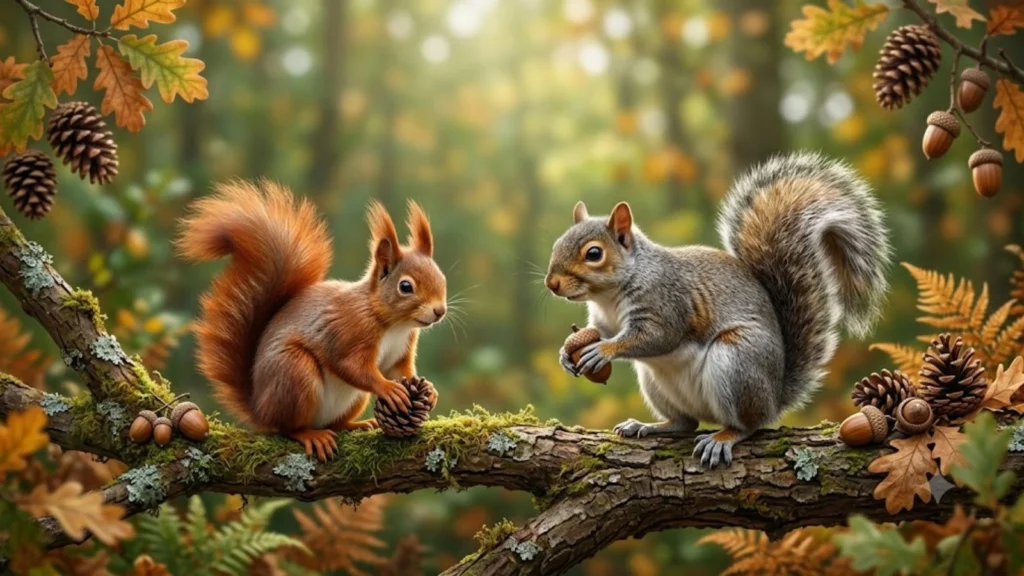
The red squirrel (Sciurus vulgaris) is native to Europe and parts of Asia. It has reddish fur, tufted ears, and a smaller body size.
The grey squirrel (Sciurus carolinensis) originally comes from North America. It was introduced into several countries, including the United Kingdom, where it has spread successfully.
Although both species share similar habits, they differ significantly in appearance, diet, and survival strategies.
Red Squirrel vs Grey Squirrel at a Glance
| Feature | Red Squirrel | Grey Squirrel |
|---|---|---|
| Scientific Name | Sciurus vulgaris | Sciurus carolinensis |
| Fur Color | Red, chestnut, or dark brown | Grey with white underside |
| Size | Smaller | Larger |
| Weight | 250–350 grams | 400–700 grams |
| Ear Tufts | Prominent in winter | Usually absent |
| Origin | Europe and Asia | North America |
| Conservation Status | Declining in many regions | Widespread and abundant |
Appearance Differences
Red Squirrel Appearance
Red squirrels are easy to recognize once you know what to look for.
They usually have:
- Reddish-brown fur
- Cream-colored belly
- Long, fluffy tail
- Distinct ear tufts
- Small and slender body
Interestingly, not all red squirrels are bright red. Some individuals can appear dark brown or nearly black.
Grey Squirrel Appearance
Grey squirrels are larger and stockier.
They typically have:
- Grey fur
- White or pale underside
- Thick bushy tail
- Rounded ears
- Bigger body frame
Because of their larger size, grey squirrels often dominate feeding areas.
See also: African Safari Wildlife Park Coupons
Habitat and Distribution
Habitat is one of the biggest differences in the Red squirrel vs grey squirrel comparison.
Where Red Squirrels Live
Red squirrels prefer:
- Conifer forests
- Pine woodlands
- Mixed forests
- Remote woodland areas
They thrive in forests that produce plenty of seeds and pine cones.
Where Grey Squirrels Live
Grey squirrels adapt extremely well to different environments.
They commonly live in:
- Parks
- Gardens
- Urban areas
- Deciduous forests
- Suburban neighborhoods
Their adaptability is one reason they have become so successful.
Diet and Feeding Habits
Both squirrels are omnivores, but their feeding preferences differ slightly.
What Red Squirrels Eat
Red squirrels enjoy:
- Pine seeds
- Hazelnuts
- Mushrooms
- Berries
- Tree buds
- Insects
They are excellent at extracting seeds from pine cones.
What Grey Squirrels Eat
Grey squirrels eat:
- Acorns
- Walnuts
- Tree bark
- Fruits
- Seeds
- Bird eggs
- Fungi
Grey squirrels can digest acorns more efficiently than red squirrels. This advantage allows them to thrive in many woodlands.
Behavior and Personality
Red Squirrel Behavior
Red squirrels are:
- Agile climbers
- Fast movers
- Solitary animals
- Highly territorial
- More cautious around humans
They often spend their time searching for seeds and hiding food for later use.
Grey Squirrel Behavior
Grey squirrels tend to be:
- Bold
- Adaptable
- Curious
- More social
- Comfortable around people
Many city residents regularly see grey squirrels approaching bird feeders.
Why Are Red Squirrels Declining?
One of the most important topics in the Red squirrel vs grey squirrel debate is conservation.
Several factors contribute to the decline of red squirrels.
Competition for Food
Grey squirrels often outcompete red squirrels for nuts and seeds.
Habitat Loss
Forest destruction reduces suitable habitats for red squirrels.
Squirrelpox Virus
Grey squirrels carry squirrelpox virus without becoming seriously ill. However, the disease is often deadly to red squirrels.
Population Pressure
Because grey squirrels reproduce successfully and adapt quickly, they continue expanding into areas once occupied by red squirrels.
Reproduction and Life Cycle
Red Squirrels
- Breeding season: Late winter and summer
- Babies per litter: Usually 2–4
- Lifespan: Around 3–6 years in the wild
Grey Squirrels
- Breeding season: Twice yearly
- Babies per litter: Usually 2–5
- Lifespan: Around 6–12 years
Grey squirrels generally live longer and maintain larger populations.
Ecological Importance
Both squirrel species play valuable roles in ecosystems.
Seed Dispersal
Squirrels bury nuts and seeds. Many forgotten seeds eventually grow into trees.
Forest Regeneration
Their food-storage habits help forests regenerate naturally.
Food Source
Squirrels provide food for predators such as:
- Foxes
- Birds of prey
- Pine martens
- Wild cats
Healthy squirrel populations contribute to balanced ecosystems.
Advantages and Challenges
| Red Squirrel | Grey Squirrel |
|---|---|
| Native species | Highly adaptable |
| Important for biodiversity | Thrives in urban areas |
| Attractive appearance | Efficient food gatherer |
| Sensitive to habitat changes | Can spread squirrelpox virus |
| Vulnerable populations | Competes with native squirrels |
Red Squirrel vs Grey Squirrel: Which Is Better Adapted?
In terms of survival skills, grey squirrels have several advantages.
Grey Squirrels Excel Because They:
- Digest acorns efficiently
- Adapt to cities and parks
- Tolerate various habitats
- Produce strong populations
- Carry squirrelpox without severe illness
Red Squirrels Excel Because They:
- Thrive in conifer forests
- Are highly agile climbers
- Efficiently extract seeds from pine cones
- Occupy specialized habitats
Neither species is “better.” They simply evolved for different environments.
Conservation Efforts
Wildlife organizations continue working to protect red squirrel populations.
Common conservation measures include:
- Protecting woodland habitats
- Planting conifer forests
- Monitoring squirrel populations
- Controlling squirrelpox spread
- Supporting pine marten recovery
Pine martens naturally help control grey squirrel numbers, indirectly benefiting red squirrels in some regions.
Amazing Facts About Squirrels
- Red squirrels can leap several feet between branches.
- Grey squirrels can remember thousands of hidden nuts.
- Squirrels use their tails for balance and communication.
- Red squirrels develop distinctive ear tufts during winter.
- Grey squirrels sometimes pretend to bury food to trick thieves.
- Both species can rotate their ankles to climb down trees headfirst.
Frequently Asked Questions
Are red squirrels rarer than grey squirrels?
Yes. Red squirrels have declined significantly in many regions, while grey squirrels remain widespread.
Can red and grey squirrels live together?
They sometimes share habitats temporarily, but grey squirrels usually outcompete red squirrels.
Why do grey squirrels dominate?
Grey squirrels adapt better to different environments and can digest a wider range of foods.
Do grey squirrels harm red squirrels?
Indirectly, yes. They compete for resources and can spread squirrelpox virus.
Which squirrel is larger?
Grey squirrels are generally much larger and heavier than red squirrels.
Can you see red squirrels in cities?
Red squirrels usually avoid urban environments and prefer woodland habitats.
Conclusion
The story of Red squirrel vs grey squirrel goes far beyond differences in fur color. These two fascinating mammals differ in size, habitat preferences, behavior, and survival strategies.
Red squirrels remain beloved native wildlife species known for their striking appearance and woodland lifestyle. Meanwhile, grey squirrels have become highly successful because of their adaptability and ability to thrive in diverse environments.
Understanding these differences helps us appreciate both species and recognize the importance of protecting native wildlife. By supporting habitat conservation and learning more about these remarkable animals, we can help ensure that future generations continue to enjoy seeing squirrels in forests, parks, and gardens around the world.