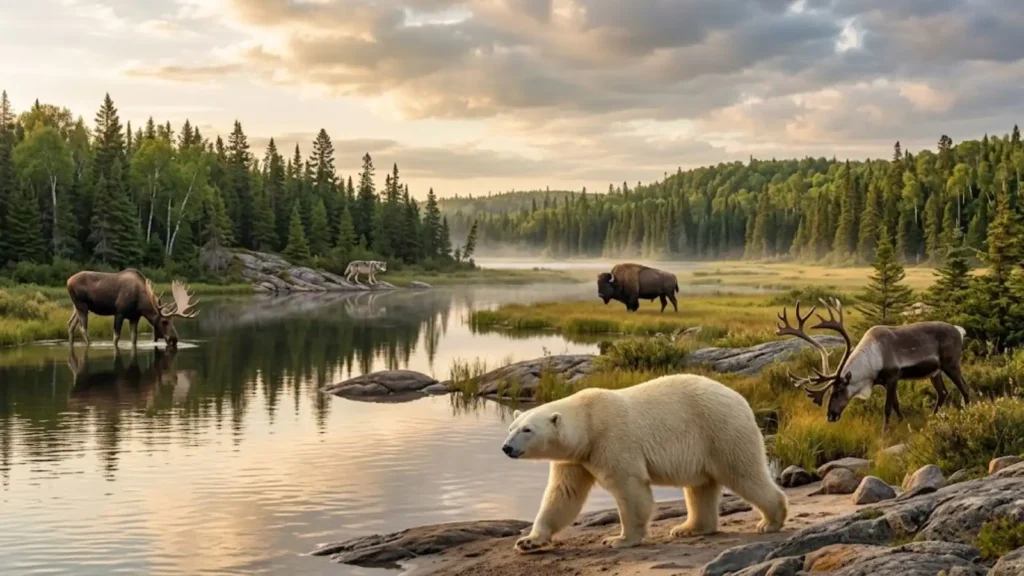
Manitoba is one of Canada ’s most fascinating provinces for wildlife lovers. From the famous polar bears of Churchill to moose, black bears, wolves, caribou, bison, and countless bird species, wildlife in Manitoba Canada reflects the province’s remarkable natural diversity. Its landscapes range from boreal forests and wetlands to grasslands, freshwater lakes, and Arctic tundra. These different habitats provide homes for hundreds of animal species throughout the year.
Manitoba is also an important destination for wildlife watching, photography, birding, and nature exploration. Protected areas and Wildlife Management Areas help conserve valuable habitats while allowing people to experience nature responsibly. The provincial government reports that Manitoba has more than 7.2 million hectares within its protected and conserved areas network.
Wildlife in Manitoba Canada – Quick Overview
Wildlife in Manitoba Canada includes large mammals, predators, birds, reptiles, amphibians, fish, and many smaller species. Some of the best-known animals include polar bears, moose, black bears, wolves, woodland caribou, white-tailed deer, beavers, foxes, and wood bison.
Manitoba’s official wildlife information lists moose, elk, several types of caribou, white-tailed deer, black bears, and gray wolves among its big-game animals. Other listed species include beavers, coyotes, Arctic foxes, wolverines, lynx, river otters, and polar bears.
The province’s wildlife changes dramatically from north to south. Northern Manitoba supports Arctic and boreal species, while southern regions contain prairie animals, wetlands, forests, and migratory birds.
Why Is Manitoba Famous for Wildlife?
Manitoba is famous for wildlife because it contains several major ecosystems within one province. Its northern region reaches the Hudson Bay coast, while the south contains prairie landscapes, forests, rivers, and wetlands.
Churchill is particularly famous for polar bear watching. During the fall migration toward Hudson Bay, polar bears gather near the Churchill area while waiting for sea ice to form.
The province is also known for its woodland caribou, moose, black bears, wolves, bison, waterfowl, and other native animals. Manitoba’s government describes the province as having rich natural landscapes and wildlife diversity ranging from Churchill’s polar bears to the garter snakes of Narcisse and prairie plants near Tolstoi.
Polar Bears in Manitoba
Polar bears are perhaps the most iconic animals associated with wildlife in Manitoba Canada. Churchill, located on the shores of Hudson Bay, has earned worldwide attention for its polar bear population.
Polar bears spend much of their time on sea ice, where they hunt seals. As the ice-free season arrives, many bears move toward land and wait for sea ice to return.
Manitoba provides special protection for these remarkable animals. The province does not allow recreational or commercial harvesting of polar bears.
Visitors can experience polar bears through responsible wildlife tourism and guided viewing opportunities. However, people should always follow local safety rules because polar bears are powerful wild predators.
Moose in Manitoba
The moose is another important species found across Manitoba. These enormous members of the deer family live in forested areas, wetlands, and regions with abundant vegetation.
Moose are especially well adapted to Manitoba’s cold climate. Their long legs help them move through deep snow and wet terrain, while their large bodies help them survive harsh winters.
During warmer months, moose feed on leaves, aquatic plants, shrubs, and other vegetation. They are generally solitary animals, although females stay with their young during the early stages of life.
Seeing a moose in the wild can be an unforgettable experience, but visitors should maintain a safe distance and avoid approaching the animal.
Black Bears and Other Predators
Black bears are widespread in suitable forest habitats across Manitoba. They are omnivores and eat a varied diet that may include berries, plants, insects, fish, and other available foods.
Manitoba is also home to several important predators, including gray wolves, coyotes, foxes, lynx, and wolverines. These animals play an essential role in maintaining healthy ecosystems by influencing prey populations.
Wolves, for example, often travel across large territories in search of food. Lynx are specially adapted to northern forests and are closely associated with snowshoe hares.
Predators may be difficult to spot because many are secretive and avoid humans. Their presence, however, shows that Manitoba still contains large areas of functioning natural habitat.
Caribou in Manitoba
Caribou are another important part of Manitoba’s northern wildlife. The province has both barren-ground caribou and woodland caribou.
Woodland caribou live mainly in boreal environments and depend on large, connected habitats. Their specialized hooves help them travel across snow and wetlands. Caribou also have a unique feature among deer: both males and females can grow antlers.
Boreal woodland caribou face conservation challenges, making habitat protection particularly important. Maintaining large forests, peatlands, and connected ecosystems can help support their populations.
Bison and Manitoba’s Grasslands
Bison have a deep connection with the Canadian prairie. Wood bison are among the wild animals officially recognized in Manitoba, while historical changes have affected the distribution of bison across the province.
These powerful herbivores can influence grassland ecosystems through grazing and movement. Their presence also represents an important part of Manitoba’s natural and cultural heritage.
Grasslands provide habitat for many other species, including birds, insects, small mammals, and reptiles. Protecting these habitats is therefore important far beyond the conservation of one animal.
Birds and Waterfowl in Manitoba
Birdwatchers have plenty to discover when exploring wildlife in Manitoba Canada. The province contains forests, prairie, wetlands, lakes, rivers, and coastal habitats that attract a wide range of birds.
Waterfowl are especially common around Manitoba’s wetlands and lakes. Ducks, geese, herons, shorebirds, and other species use these areas for feeding, nesting, and migration.
Forests provide habitat for owls, woodpeckers, songbirds, and birds of prey. Meanwhile, prairie ecosystems support specialized grassland birds.
Manitoba’s variety of habitats makes it an excellent destination for both beginner and experienced birdwatchers.
Wildlife Habitats in Manitoba
Manitoba’s wildlife diversity depends heavily on its varied habitats. Important ecosystems include:
- Boreal forests – home to moose, wolves, black bears, lynx, and woodland caribou.
- Prairie grasslands – support deer, birds, insects, and other grassland species.
- Wetlands – provide essential habitat for waterfowl, amphibians, fish, and aquatic wildlife.
- Arctic tundra – supports northern species adapted to extreme conditions.
- Hudson Bay coast – provides critical habitat for polar bears and other northern wildlife.
- Freshwater lakes and rivers – support fish, birds, mammals, and amphibians.
The Manitoba government notes that the province contains landscapes ranging from grasslands and boreal forests to wetlands and Arctic tundra.
Best Places to See Wildlife in Manitoba
Manitoba offers many opportunities for wildlife observation. Some locations are particularly well known for their natural environments.
Churchill
Churchill is the province’s most famous wildlife destination. It is especially well known for polar bears and offers opportunities to observe other Arctic and sub-Arctic species.
Wildlife Management Areas
Manitoba has an extensive network of Wildlife Management Areas (WMAs). These areas were established to improve wildlife management, conservation, and habitat protection.
The provincial government says Manitoba’s WMA system covers almost 2 million hectares of wildlife habitat. These areas also provide opportunities for birding and wildlife watching.
Provincial Parks
Manitoba’s provincial parks offer opportunities to explore forests, lakes, wetlands, and grasslands. Visitors may encounter birds, deer, beavers, bears, moose, and other wildlife depending on the location and season.
Always check local rules before entering remote areas or participating in wildlife-related activities.
Wildlife Conservation in Manitoba
Protecting wildlife requires more than protecting individual animals. Healthy habitats are equally important.
Manitoba has established protected areas, ecological reserves, provincial parks, national parks, and Wildlife Management Areas to conserve biodiversity. According to the provincial government, its protected and conserved areas network covers approximately 11.1% of Manitoba.
Wildlife Management Areas also conserve important habitat while providing opportunities for responsible recreation and wildlife viewing.
Conservation becomes increasingly important as habitats face pressure from development, climate change, invasive species, pollution, and other environmental challenges.
How to Watch Wildlife Responsibly
Wildlife watching can be exciting, but animals should always come first. Follow these simple principles:
- Keep a safe distance from wild animals.
- Never feed wildlife.
- Avoid disturbing nests, dens, or young animals.
- Stay on designated trails when required.
- Follow park and wildlife regulations.
- Keep dogs under control.
- Take photographs without chasing animals.
- Leave natural areas clean.
- Follow local warnings about dangerous wildlife.
- Use experienced guides when visiting remote wildlife areas.
Responsible wildlife tourism helps protect animals while allowing people to enjoy Manitoba’s remarkable natural heritage.
Why Wildlife Matters to Manitoba
Wildlife plays an important role in Manitoba’s ecosystems. Predators help regulate prey populations, herbivores influence vegetation, and birds and insects contribute to pollination and seed dispersal.
Healthy wildlife populations also indicate healthy ecosystems. Protected natural areas provide animals with places to feed, reproduce, migrate, and find shelter.
The province’s conservation programs recognize that biodiversity supports healthy ecosystems and provides benefits for people as well.
For nature lovers, this means that protecting Manitoba’s wildlife is not only about saving individual species. It is about maintaining the landscapes and ecological relationships that allow entire communities to survive.
FAQs About Wildlife in Manitoba Canada
What animals are commonly found in Manitoba?
Common wildlife includes moose, black bears, white-tailed deer, beavers, coyotes, wolves, foxes, lynx, waterfowl, and many other species.
What is Manitoba most famous for in terms of wildlife?
Manitoba is particularly famous for its polar bears, especially around Churchill. The province is also known for moose, caribou, black bears, wolves, bison, and diverse birdlife.
Where can I see polar bears in Manitoba?
Churchill is the best-known destination for observing polar bears in Manitoba. Wildlife viewing should always follow local safety guidance and responsible tourism practices.
Does Manitoba have wolves?
Yes. Gray wolves are among the wild animals officially recognized in Manitoba.
Are caribou found in Manitoba?
Yes. Manitoba is home to both barren-ground and woodland caribou. Woodland caribou are associated with boreal habitats and are an important conservation concern.
How can I help protect Manitoba wildlife?
You can help by respecting wildlife distances, protecting natural habitats, avoiding litter, following park regulations, supporting conservation organizations, and practicing responsible wildlife tourism.
Conclusion
Wildlife in Manitoba Canada represents one of the province’s greatest natural treasures. From magnificent polar bears along Hudson Bay to moose in boreal forests and caribou across northern landscapes, Manitoba supports an impressive range of animals and ecosystems. Its wetlands, grasslands, forests, lakes, and tundra provide essential habitats for wildlife throughout the province.
Protected areas and Wildlife Management Areas play an important role in preserving these natural environments. By exploring responsibly and supporting conservation, visitors can enjoy Manitoba’s wildlife while helping protect it for future generations.