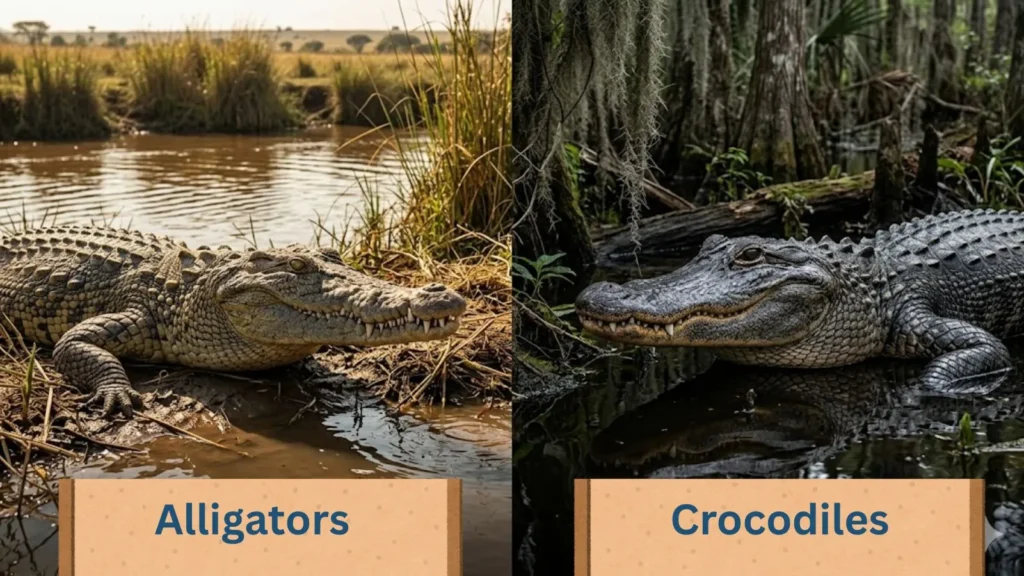
Many people confuse alligators vs crocodiles because both reptiles share similar body shapes, powerful jaws, and semi-aquatic lifestyles. However, there are several visible differences between alligators and crocodiles that make each species unique. From snout shape to skin color and habitat preferences, these ancient predators display remarkable distinctions that wildlife enthusiasts often find fascinating.
Interestingly, true alligators are not naturally found in Africa. Crocodiles dominate African rivers, lakes, swamps, and wetlands, while alligators mainly inhabit parts of the United States and China. Despite this geographic difference, people frequently compare African crocodiles with alligators because they belong to the same reptilian order known as Crocodylia.
Understanding these differences helps wildlife lovers identify species correctly while appreciating their ecological importance in global ecosystems.
See also: Wildlife Rehabilitation Wisconsin
Are There Alligators in Africa?
One of the biggest misconceptions involves the existence of African alligators. In reality, Africa does not have native alligator species living in the wild. Instead, the continent is home to several crocodile species, including:
- Nile crocodile
- Dwarf crocodile
- Slender-snouted crocodile
- West African crocodile
Alligators naturally occur in:
- Southeastern United States
- Eastern China
Although zoos and wildlife parks in Africa may display alligators, they are not native African reptiles.
The Main Visible Differences Between Alligators and Crocodiles
While they may appear similar from a distance, several physical traits separate alligators from crocodiles.
Snout Shape
One of the easiest ways to identify these reptiles is by observing the shape of their snouts.
Alligators
Alligators have broad, rounded, U-shaped snouts. Their jaws appear wider and shorter, helping them crush turtles and hard-shelled prey.
Crocodiles
Crocodiles possess narrow, pointed, V-shaped snouts designed for catching fish and slicing through prey efficiently.
This difference becomes immediately noticeable when comparing photographs of both reptiles.
Teeth Visibility
Teeth placement is another major identifying feature.
Alligators
When an alligator closes its mouth, most lower teeth remain hidden because the upper jaw overlaps the lower jaw.
Crocodiles
Crocodiles display visible upper and lower teeth even when their mouths are closed. Their fourth lower tooth is especially prominent.
This exposed-tooth appearance gives crocodiles a more aggressive facial expression.
Skin Color and Texture
Color variations also help distinguish these reptiles.
Alligator Color
Alligators usually appear:
- Dark gray
- Blackish-green
- Charcoal colored
Their darker tones help camouflage them in murky freshwater habitats.
Crocodile Color
African crocodiles often display:
- Olive green
- Brownish tan
- Light gray
Their coloration blends well with muddy riverbanks and tropical wetlands.
Crocodiles also tend to have rougher-looking scales and more textured skin.
Habitat Differences
Habitat preference is another important distinction.
Alligator Habitats
Alligators prefer freshwater environments such as:
- Swamps
- Marshes
- Slow-moving rivers
- Lakes
They rarely tolerate saltwater conditions for extended periods.
African Crocodile Habitats
African crocodiles inhabit a wider range of ecosystems, including:
- Rivers
- Wetlands
- Estuaries
- Mangrove swamps
- Coastal regions
Many crocodile species possess specialized salt glands that allow survival in brackish and saltwater habitats.
Size Comparison
Crocodiles generally grow larger than alligators.
Alligator Size
American alligators usually reach:
- 10 to 15 feet long
- 500 to 1,000 pounds
African Crocodile Size
Nile crocodiles often grow:
- 12 to 20 feet long
- Over 1,500 pounds
Large Nile crocodiles rank among the biggest reptiles on Earth.
Behavior and Aggression
Behavioral differences also separate these apex predators.
Alligator Temperament
Alligators are generally less aggressive toward humans unless threatened or protecting nests.
They often avoid confrontation when possible.
Crocodile Temperament
African crocodiles, especially Nile crocodiles, are far more territorial and aggressive. They are responsible for numerous wildlife attacks near African waterways.
Their powerful hunting instincts make them highly dangerous predators.
Hunting Techniques
Both reptiles are ambush predators, but their hunting methods vary slightly.
Alligator Hunting Style
Alligators frequently consume:
- Fish
- Turtles
- Birds
- Small mammals
Their crushing bite force helps break turtle shells effectively.
Crocodile Hunting Style
African crocodiles prey on:
- Fish
- Antelope
- Zebras
- Birds
- Large mammals
Nile crocodiles are capable of taking down extremely large prey during river crossings.
Bite Force Comparison
Both species possess incredible jaw strength.
Alligator Bite Force
Alligators generate immense crushing pressure ideal for hard prey.
Crocodile Bite Force
Crocodiles possess one of the strongest bite forces in the animal kingdom, allowing them to overpower massive animals.
Despite powerful closing strength, both reptiles have relatively weak muscles for opening their jaws.
Lifespan Differences
These reptiles can live for decades in the wild.
Alligator Lifespan
Most alligators live:
- 35 to 50 years in the wild
Crocodile Lifespan
African crocodiles may survive:
- 70 years or longer under ideal conditions
Their long lifespan contributes to stable predator populations in healthy ecosystems.
Intelligence and Survival Adaptations
Both reptiles demonstrate impressive survival abilities developed over millions of years.
Alligator Adaptations
Alligators excel in freshwater camouflage and cold-weather survival. Some can partially freeze during winter while remaining alive.
Crocodile Adaptations
African crocodiles are highly adaptable hunters capable of surviving in diverse climates and water conditions.
Their advanced sensory organs help detect vibrations and movement in water.
Importance in Ecosystems
Alligators and crocodiles play critical roles in maintaining ecological balance.
Controlling Animal Populations
These predators regulate fish and mammal populations, preventing ecosystem imbalance.
Supporting Wetland Health
Their nesting and movement patterns create habitats for birds, fish, and aquatic organisms.
Scavenging Dead Animals
Both species remove decaying carcasses from waterways, helping reduce disease spread.
Without these reptiles, wetland ecosystems could become unstable.
Conservation Challenges
Despite their resilience, crocodiles and alligators face several modern threats.
Habitat Destruction
Wetland drainage and urban development reduce natural habitats.
Illegal Hunting
Some species suffer from poaching for skin, meat, and traditional medicine markets.
Climate Change
Changing water levels and temperatures affect breeding patterns and nesting success.
Conservation programs now focus on habitat protection and sustainable wildlife management.
Fascinating Facts About Crocodiles and Alligators
- Crocodiles are older than dinosaurs.
- Alligators can survive freezing temperatures temporarily.
- Nile crocodiles can hold their breath for over an hour.
- Crocodile mothers carefully carry babies in their mouths.
- Alligators communicate using deep vibrating sounds.
These extraordinary traits highlight their ancient evolutionary success.
FAQs About African Alligators vs Crocodiles
Are there true alligators in Africa?
No. Africa naturally contains crocodile species, not alligators.
What is the easiest way to tell them apart?
Snout shape and visible teeth are the clearest differences.
Which is more aggressive?
Crocodiles, especially Nile crocodiles, are generally more aggressive.
Which reptile is larger?
African crocodiles usually grow larger than alligators.
Can crocodiles live in saltwater?
Yes. Many crocodile species tolerate saltwater environments.
Are alligators dangerous?
Yes, but they are often less aggressive toward humans than crocodiles.
Conclusion
Although alligators vs crocodiles belong to the same reptilian family group, several visible differences separate them clearly. Snout shape, teeth visibility, coloration, habitat preference, and behavior all help identify these fascinating predators. While Africa is home to powerful crocodile species like the Nile crocodile, true alligators do not naturally inhabit the continent.
Understanding these distinctions not only improves wildlife knowledge but also increases appreciation for the ecological role these ancient reptiles play in wetlands and river ecosystems worldwide. Their survival over millions of years reflects extraordinary adaptability, making them some of nature’s most remarkable predators.