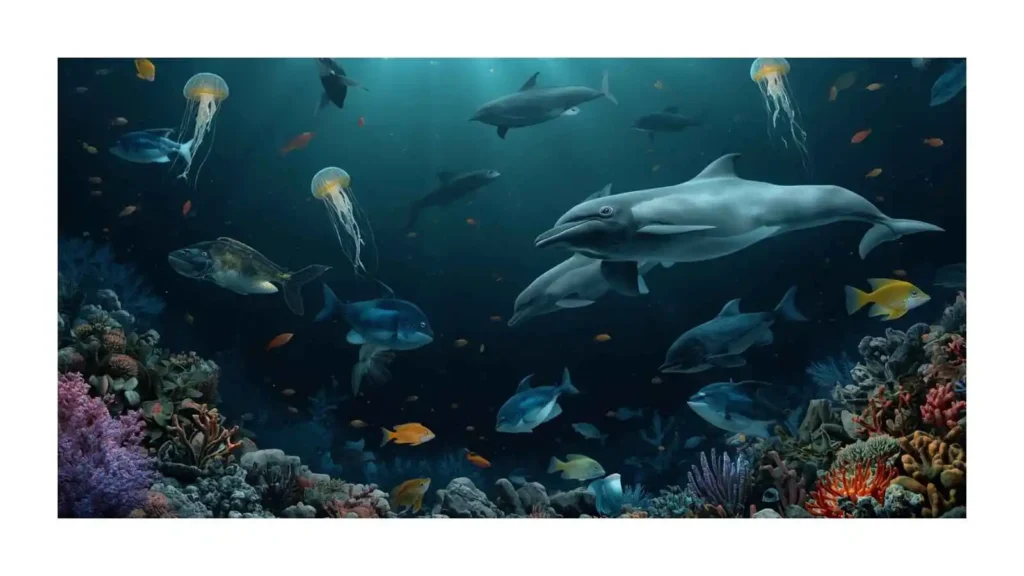
A strange world of marine life may be found in the Black Sea, which is tucked away between Europe and Asia. While many tourists are familiar with its striking shoreline, fewer are aware of the amazing environment that exists beneath it. Dolphins, fish, crabs, jellyfish, seals, and uncommon seabirds are among the amazing variety of creatures found in Black Sea ecosystems. While certain organisms thrive in shallow, oxygen-rich seas, the poisonous hydrogen sulfide in deeper areas keeps them all but dead.
|See also: What animals live in rivers and streams
The Black Sea is one of the most distinctive marine ecosystems on Earth because of this peculiar setting. In order to comprehend ocean conservation, aquatic adaptations, and biodiversity patterns, researchers, students, and wildlife enthusiasts frequently study Black Sea creatures. These aquatic animals, which range from joyful bottlenose dolphins to poisonous weever fish, demonstrate nature’s remarkable capacity for adaptation and survival in shifting environments.
Scientific Classification
Marine animals in the Black Sea belong to several biological groups.
| Animal | Scientific Class | Category |
|---|---|---|
| Bottlenose Dolphin | Mammalia | Marine Mammal |
| Black Sea Turbot | Actinopterygii | Fish |
| Moon Jellyfish | Scyphozoa | Jellyfish |
| Mediterranean Monk Seal | Mammalia | Marine Mammal |
| Blue Crab | Malacostraca | Crustacean |
| Anchovy | Actinopterygii | Fish |
Scientists use classification systems to study relationships, habitats, and evolutionary traits among marine organisms.
Physical Characteristics
Animals in Black Sea ecosystems display remarkable adaptations.
Bottlenose Dolphins
These intelligent mammals feature:
- Streamlined gray bodies
- Sharp eyesight
- Echolocation abilities
- Powerful tails
Black Sea Turbot
Turbot fish possess:
- Flat oval bodies
- Camouflage skin
- Bottom-dwelling adaptations
Moon Jellyfish
Moon jellyfish appear almost transparent with soft glowing bodies.
These features help marine species survive varying water temperatures and oxygen levels.
Habitat and Distribution
The Black Sea connects with the Mediterranean Sea through narrow waterways. However, its ecosystem differs greatly from other oceans.
Shallow Coastal Waters
Most marine animals live in upper oxygen-rich layers near:
- Romania
- Turkey
- Bulgaria
- Ukraine
- Georgia
Deep Water Zones
Below deeper levels, oxygen disappears almost completely. Toxic hydrogen sulfide dominates these dark waters, preventing most life from surviving.
River Influence
Large rivers like the Danube bring nutrients into the Black Sea, supporting plankton and fish populations.
Diet and Hunting Behavior
Different Black Sea animals follow unique feeding strategies.
Predatory Fish
Species like bluefish and mackerel hunt:
- Small fish
- Shrimp
- Anchovies
Dolphins
Bottlenose dolphins use echolocation to locate prey underwater.
Jellyfish
Moon jellyfish capture tiny plankton using tentacles.
Crabs
Blue crabs scavenge organic material and hunt small marine creatures.
Hunting Adaptations
Marine predators rely on:
- Speed
- Sharp senses
- Camouflage
- Group hunting
These skills improve survival in competitive aquatic environments.
Reproduction and Lifespan
Marine reproduction varies widely among Black Sea species.
Fish Reproduction
Anchovies release thousands of eggs during spawning seasons.
Dolphin Birth
Female dolphins give birth to one calf after lengthy pregnancies.
Jellyfish Life Cycle
Jellyfish reproduce through complex stages involving larvae and polyps.
| Animal | Average Lifespan |
|---|---|
| Bottlenose Dolphin | 40–50 years |
| Anchovy | 3–5 years |
| Blue Crab | 3–4 years |
| Turbot | 15–20 years |
Environmental quality strongly affects marine survival rates.
Popular Animals in Black Sea
Bottlenose Dolphin
One of the most famous animals in Black Sea waters is the bottlenose dolphin.
Interesting Traits
- Highly intelligent
- Social behavior
- Excellent communication skills
Habitat
Coastal waters and open sea regions.
Conservation Status
Protected due to population decline.
Black Sea Turbot
This valuable commercial fish lives near sandy sea floors.
Physical Features
- Flat body
- Excellent camouflage
- Strong swimming ability
Diet
Small fish and crustaceans.
Mediterranean Monk Seal
This rare marine mammal occasionally appears along Black Sea coasts.
Unique Characteristics
- Thick gray fur
- Shy personality
- Excellent diving skills
Threats
Habitat destruction and fishing activities.
Moon Jellyfish
Moon jellyfish drift gracefully through coastal waters.
Safety Note
Most moon jellyfish cause mild irritation rather than dangerous stings.
Ecological Role
They help maintain plankton balance.
Blue Crab
Blue crabs thrive in shallow coastal ecosystems.
Diet
- Small fish
- Shellfish
- Organic matter
Adaptations
Strong claws help defend against predators.
Behavior and Adaptations
Animals in Black Sea habitats developed specialized survival strategies.
Dolphin Communication
Dolphins communicate through whistles and clicks.
Fish Camouflage
Bottom-dwelling fish blend into sandy environments.
Jellyfish Drifting
Jellyfish conserve energy by floating with water currents.
|See more: Creek animals
Seasonal Migration
Many fish species migrate according to temperature and breeding cycles.
These behaviors improve long-term survival in changing marine conditions.
Threats and Conservation Status
Unfortunately, Black Sea wildlife faces several environmental dangers.
Main Threats
- Pollution
- Overfishing
- Plastic waste
- Climate change
- Habitat destruction
Invasive Species
Non-native jellyfish species disrupted local food chains in past decades.
Conservation Efforts
Marine organizations now focus on:
- Coastal cleanup programs
- Sustainable fishing
- Wildlife monitoring
- Protected marine zones
Human awareness remains essential for protecting Black Sea biodiversity.
Benefits of Black Sea Wildlife
Marine ecosystems provide important environmental and economic value.
Ecological Benefits
- Maintain food chains
- Support biodiversity
- Balance aquatic ecosystems
Economic Importance
Fishing and ecotourism support local communities.
Educational Value
Black Sea wildlife helps scientists study marine adaptation and climate effects.
Healthy oceans benefit both humans and wildlife populations.
Safety Tips Around Black Sea Animals
Visitors should respect marine wildlife carefully.
Avoid Touching Jellyfish
Some species may cause skin irritation.
Observe Dolphins From Distance
Boats should avoid disturbing marine mammals.
Follow Local Guidelines
Protected species require respectful observation.
Prevent Pollution
Never leave plastic or trash near coastal waters.
Responsible tourism supports conservation success.
Interesting Facts About Animals in Black Sea
- The deeper Black Sea contains very little oxygen.
- Bottlenose dolphins can recognize themselves in mirrors.
- Anchovies are among the region’s most important commercial fish.
- Some jellyfish glow softly underwater.
- The Black Sea once had larger monk seal populations.
Nature continuously surprises researchers with unusual marine adaptations.
Summary
Dolphins, turbot, jellyfish, seals, crabs, and countless fish species live in oxygen-rich upper waters while deeper zones remain almost lifeless. These animals support biodiversity, tourism, fishing industries, and scientific research; however, pollution, overfishing, and climate change threaten long-term ecological balance.
Preserving Black Sea wildlife helps preserve marine beauty and environmental health for future generations.
Conservation Awareness Message
Every marine species plays a role in ocean balance. Protect coastlines, reduce pollution, and support sustainable fishing to preserve Black Sea wildlife and biodiversity for future generations.
FAQs
What animals live in the Black Sea?
The Black Sea contains dolphins, jellyfish, anchovies, turbot fish, blue crabs, monk seals, and many seabirds.
Why is the Black Sea unique?
Deep waters contain toxic hydrogen sulfide and very little oxygen, limiting marine life in lower layers.
Are dolphins found in the Black Sea?
Yes. Bottlenose dolphins and several other dolphin species live in Black Sea waters.
Is the Black Sea safe for swimming?
Most coastal areas are safe, but swimmers should avoid pollution zones and respect marine wildlife.
What is the most famous fish in the Black Sea?
Anchovy and Black Sea turbot are among the region’s best-known fish species.