
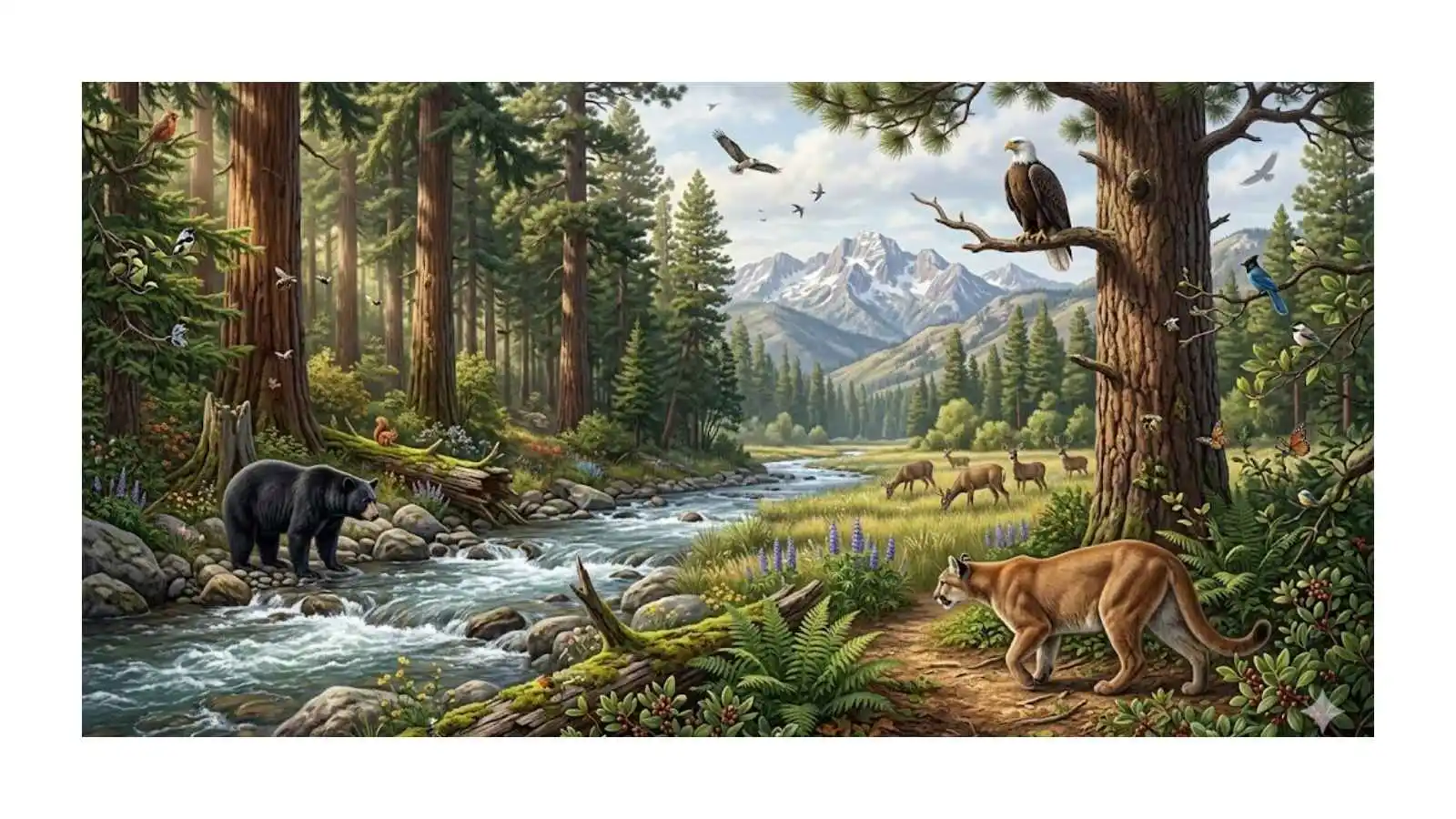
Suddenly, you hear a rustle in the forest shadows. Your heart might skip as a bobcat creeps into view. That’s just a glimpse of the wild animals in Northern California, a region alive with vibrant ecosystems. From towering redwoods to rippling rivers and rugged mountains, this part of the Golden State supports an astounding variety of wildlife found nowhere else on Earth. Northern California’s wilderness is a tapestry of forests, grasslands, wetlands, and coastlines that provide refuge to mammals, birds, reptiles, amphibians, and more.
People search for information on these wild animals to understand what species live here, how they behave, and how to safely coexist with them. This guide explores these animals in detail with facts, classifications, risks, and conservation wisdom. Whether you’re a hiker, photographer, student, or nature lover, you’ll gain valuable insight into these native inhabitants—their traits, habitats, feeding habits, adaptations, and why they matter to our world. By the end, you’ll better appreciate and protect the biodiversity that makes Northern California unique.
|See more: wild animals in kauai
Scientific Classification
Every wild animal belongs to a biological order, family, genus, and species. The following table captures how some Northern California fauna are scientifically classified:
| Common Name | Scientific Name | Class | Group |
|---|---|---|---|
| Black Bear | Ursus americanus | Mammalia | Mammals |
| Mountain Lion | Puma concolor | Mammalia | Mammals |
| Black-tailed Deer | Odocoileus hemionus | Mammalia | Mammals |
| Bald Eagle | Haliaeetus leucocephalus | Aves | Birds |
| Western Rattlesnake | Crotalus oreganus | Reptilia | Reptiles |
| Pacific Giant Salamander | Dicamptodon ensatus | Amphibia | Amphibians |
| (Scientific examples based on known species in the region.) |
Physical Characteristics
Wild animals in Northern California vary greatly in size, shape, and color. Some have sharp teeth and claws for hunting, while others rely on camouflage:
- Black Bears: Large mammals with thick fur ranging from black to brown.
- Mountain Lions: Sleek, tawny cats with powerful hind legs.
- Deer: Medium-sized herbivores with graceful bodies and swift legs.
- Birds of Prey: Eagles and hawks have hooked beaks and sharp talons.
- Reptiles & Amphibians: Exotic lizards, snakes, and salamanders have scales or moist skin adapted for their habitat.
- Small Mammals: Foxes, raccoons, and martens are agile and agile, with dense fur coats.
These physical traits help animals feed, defend themselves, move, and survive across forests, rivers, and mountain terrains.
Habitat and Distribution
Wildlife distribution in Northern California is shaped by rich habitat diversity. Forests dominate coastal and inland hills, rivers and wetlands line valley floors, and rugged mountains rise to alpine zones.
- Forests: Home to black bears, deer, bobcats, and myriad bird species.
- Grasslands & Scrub: Coyotes, foxes, rabbits, and lizards thrive here.
- Wetlands & Rivers: Amphibians like salamanders and waterbirds such as herons live near water.
- Mountains: Mountain lions, wolves (in some counties), and elk inhabit higher elevations.
Some species like the California giant salamander are endemic to this region’s streams and remain elusive.
Diet and Hunting Behavior
Wild animals display diverse feeding habits shaped by evolution and food availability:
- Predators: Mountain lions and bobcats stalk deer and smaller mammals with stealth and power.
- Omnivores: Coyotes, raccoons, and bears eat plant matter, insects, eggs, and carrion.
- Herbivores: Deer, elk, and some rabbits graze grasses, leaves, and berries.
- Birds of Prey: Eagles and hawks swoop to catch fish, rabbits, or rodents.
- Reptiles: Snakes often ambush or pursue insects, rodents, or frogs.
Transitioning between habitats, these animals use neighborhood resources effectively, ensuring survival in ever-changing forests, valleys, and coastal zones.
Reproduction and Lifespan
Wild animals have varying reproductive strategies and lifespans:
- Black Bears mate in spring; cubs are born in winter dens and live with their mothers for over a year.
- Mountain Lions produce small litters; juveniles stay with mothers until strong enough to hunt.
- Birds of Prey raise chicks in nests high on cliffs or tall trees each season.
- Small Reptiles and Amphibians often lay eggs in bedding or moist ground.
Lifespan ranges widely: many small snakes and birds live a few years, while larger mammals like bears can live over 20 years in the wild.
Behavior and Adaptations
Animals adapt in fascinating ways:
- Nocturnal Activity: Many mammals become active at night to avoid heat or human presence.
- Camouflage: Fur, feathers, and scales often blend seamlessly with surroundings.
- Migration: Waterbirds travel long distances along the Pacific Flyway.
- Territorial Displays: Predators mark territories with scent and sound to attract mates or repel rivals.
Such adaptations help them find food, shelter, mates, and escape danger.
Threats and Conservation Status
Despite their strength, wild animals face threats:
- Habitat Loss: Urban expansion and deforestation shrink natural homes.
- Climate Change: Alters food availability and breeding cycles.
- Human-Wildlife Conflicts: Increased contact raises injury risk for both.
- Invasive Species: Animals such as mute swans disrupt ecosystems.
Some species like the Humboldt marten are threatened due to habitat loss and low numbers. Conservation efforts, wildlife laws, and habitat protection help many species persist.
Interesting Facts
- Surprising Reappearances: Gray wolves have repopulated parts of Northern California after many decades.
- Endemic Salamanders: The California giant salamander is rarely seen yet vital to stream ecosystems.
- Bird Migration Hub: Northern California sits along the Pacific Flyway, hosting millions of migratory birds annually.
- Wild Horses: Thousands of wild horses roam public lands in the north.
Common Species List (Examples)
Here’s a snapshot of wild animals in Northern California many people may encounter:
Mammals:
- Black Bear
- Mountain Lion
- Black-tailed Deer
- Bobcat
- Coyote
- Grey Fox
- Raccoon
Birds:
- Bald Eagle
- Osprey
- Heron
- Wild Turkey
- Western Gull
Reptiles & Amphibians:
- Western Rattlesnake
- Garter Snakes
- Pacific Pond Turtle
- Giant Salamander
FAQs (Featured Snippet Optimized)
What wild animals live in Northern California?
Northern California hosts bears, mountain lions, deer, bobcats, coyotes, eagles, owls, rattlesnakes, and more across forests, rivers, and coastal zones.
Are mountain lions common in Northern California?
Yes, mountain lions are native and roam forested and mountainous areas but tend to avoid people.
Is it safe to hike near wildlife?
Always respect distance; carry noise devices, store food securely, and never feed wild animals.
What bird species are notable here?
Bald eagles, ospreys, pelicans, and migratory waterbirds use the Pacific Flyway annually.
Do wolves live in Northern California?
Gray wolves have begun repopulating in the far north, especially near the Oregon border.
Summary
In Northern California, wildlife thrives in diverse and dynamic habitats from the rugged Sierra to ancient redwood forests. The region supports mammals, birds, reptiles, and amphibians uniquely adapted to local climates and terrains. These wild animals play vital roles in ecosystems, from seed dispersal to predator-prey balance. Understanding their behavior, habitat needs, and conservation challenges helps humans live responsibly alongside them. Wildlife isn’t just scenery — it’s the beating heart of nature in Northern California’s wild corridors.