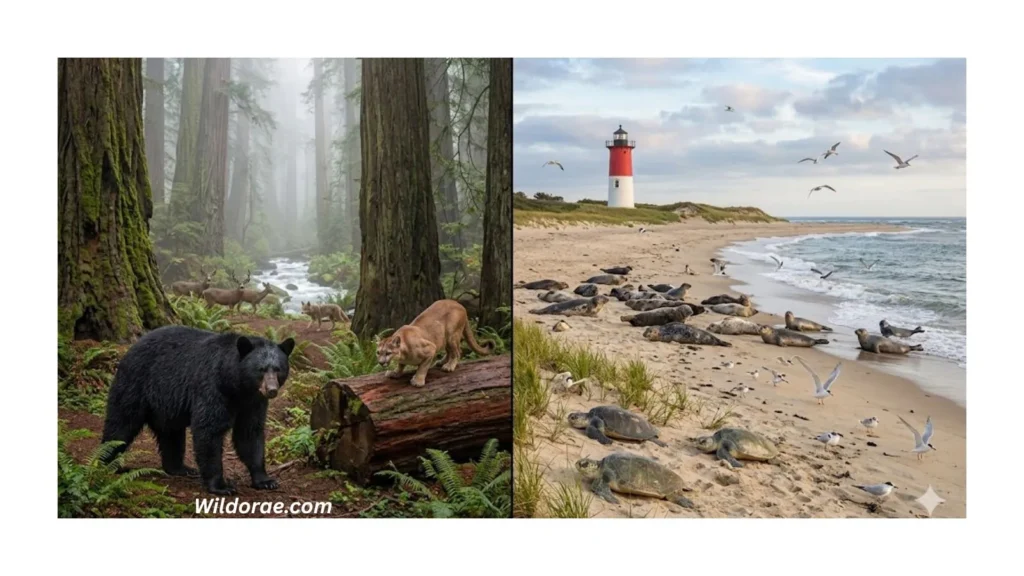
Wild animals paint the landscapes of Northern California and Cape Cod with untamed energy and fascinating life. From lush redwood forests and hidden mountain slopes to shifting sand dunes and salt‑marsh shores, these regions boast diverse, remarkable wildlife that both intrigues and educates. Whether you’re a nature lover, outdoor explorer, or wildlife enthusiast, understanding the creatures that inhabit these areas helps you appreciate nature’s wonder.
Gripping tales of rare species rediscovered in hidden corners and famous coastal critters draw viewers and researchers alike. These animals provide insight into ecosystems that have evolved unique adaptations. In Northern California, forests host elusive mammals and amphibians rarely seen by casual hikers. Meanwhile, Cape Cod’s mosaic of habitats supports sea turtles, nesting birds, and mammals adapted to both land and sea. The presence of these wild animals underscores the importance of conservation and respectful coexistence as human development continues to expand.
|Related: wild animals in northern california
This wildlife guide offers clear facts, helpful diagrams, tables, and practical tips to deepen your understanding and spark curiosity about these wild inhabitants of Northern California and Cape Cod.
Scientific Classification
| Region | Kingdom | Phylum | Class | Examples |
|---|---|---|---|---|
| Northern California | Animalia | Chordata | Mammalia, Aves, Amphibia | Black bear, mountain lion, Humboldt marten |
| Cape Cod | Animalia | Chordata | Mammalia, Aves, Reptilia | Gray seal, piping plover, coyote |
Physical Characteristics
Northern California Species
Hair coats, powerful limbs, and keen senses define many NorCal mammals like black‑tailed deer and bobcat. Coastal birds exhibit streamlined bodies and dense feathers for flight and protection. Amphibians like redwood salamanders have moist skin for water balance in foggy forests.
Cape Cod Species
Cape Cod wildlife includes marine mammals with thick blubber for ocean life, like seals. Wading birds such as piping plovers have long legs for foraging in wetlands. Marsh mammals like raccoons have dexterous paws for searching food.
Habitat and Distribution
Northern California Habitats
- Redwood forests and mountain slopes
- Riparian stream corridors
- Coastal bluffs and grasslands
These ecosystems shelter bears, cougars, wolves, and small carnivores. Unlike many regions, NorCal supports diverse amphibians and recently documented rediscovered species like the rare coastal marten.
Cape Cod Habitats
- Coastal dunes and salt marshes
- Woodlands and heathlands
- Ponds and freshwater wetlands
Cape Cod’s mix of coastal and terrestrial habitats supports migratory birds, seals along shorelines, and small mammals weaving through forests and marshes.
Diet and Hunting Behavior
Northern California
Animals here range from herbivores like black‑tailed deer to apex predators such as mountain lions. Coyotes scavenge and hunt small prey, while cougars ambush deer and smaller mammals in forest shadows. Many birds feed on insects and seeds, complementing the larger carnivore food web.
Cape Cod
Cape Cod wildlife have varied diets:
- Seals: eat fish and squid near shore waters.
- Birds: piping plovers feed on tiny invertebrates in wet sands.
- Coyotes and foxes: opportunistic omnivores, scavenging and hunting small mammals.
- Marine turtles: forage on seagrass and jellyfish when present.
Reproduction and Lifespan
Example Species Lifespans
- Northern California black bear: ~20–25 years in wild.
- Coastal marten: ~5–10 years with threats.
- Cape Cod gray seal: 20–30 years.
- Piping plover: ~10–15 years in ideal conditions.
Reproductive cycles correlate with seasonal changes. Many Northern California mammals mate in fall with births in spring. Cape Cod shorebirds lay eggs in sandy nests each spring and early summer.
Behavior and Adaptations
Wild animals show astonishing adaptations:
- Camouflage: Many forest mammals and birds blend with vegetation.
- Nocturnal activity: Species like raccoons and foxes hunt under moonlight.
- Seasonal migration: Some Cape Cod birds fly south in winter and return in warmer months.
- Aquatic agility: Seals and coastal birds adjust to tidal environments effortlessly.
These behaviors show how animals maximize survival and energy use across varied landscapes.
Threats and Conservation Status
Both regions face increasing human pressures:
- Habitat loss from development.
- Climate change affecting species ranges and food sources.
- Vehicle collisions and human‑wildlife conflict.
- Introduced predator imbalances like non‑native swans in NorCal marshes.
Conservation efforts focus on habitat protection, species monitoring, and public education to reduce conflicts and preserve wild corridors. Endangered species like coastal martens require targeted action plans.
Interesting Facts
- Rediscovered species: The rare Humboldt marten, once thought extinct, persists in NorCal forests.
- Cape Cod supports over 450 species of vertebrates and invertebrates in its diverse habitats.
- Northern California wolves have made a comeback after local extirpation.
- Marine mammals like gray seals frequent Outer Cape beaches in summer months.
FAQs (Optimized for Featured Snippets)
1. What wild animals live in Northern California?
Northern California hosts black‑tailed deer, mountain lions, bobcats, wolves, bears, and diverse birds and amphibians.
2. What are common animals on Cape Cod?
Cape Cod wildlife includes gray seals, raccoons, coyotes, deer, piping plovers, and a variety of birds and turtles.
3. Are there predators in Cape Cod?
Yes. Coyotes, red foxes, and birds of prey act as natural predators, while human feeding can disrupt food chains.
4. Do wolves live in Northern California?
Yes, gray wolves have reestablished packs in northeastern California after decades of absence.
5. How can I safely enjoy wildlife?
Observe from a distance, avoid feeding animals, stay on trails, and learn local safety guidelines.
Summary
Northern California and Cape Cod support diverse wild animals that reflect each region’s unique habitats. Forests, marshes, coastal beaches, and grasslands provide homes to mammals, birds, reptiles, and amphibians adapted to local conditions. Some species are thriving, while others face threats from human activity and environmental change. Understanding these native animals helps you better appreciate biodiversity and promotes better choices for coexistence. Nature in both regions remains a powerful classroom, offering endless lessons about adaptation, resilience, and ecological balance.
Conservation Awareness Message
Protecting wild animals and their homes is vital. Respect habitat boundaries, reduce pollution, and support conservation programs. Every small act helps preserve the rich wildlife heritage of Northern California and Cape Cod for future generations.