
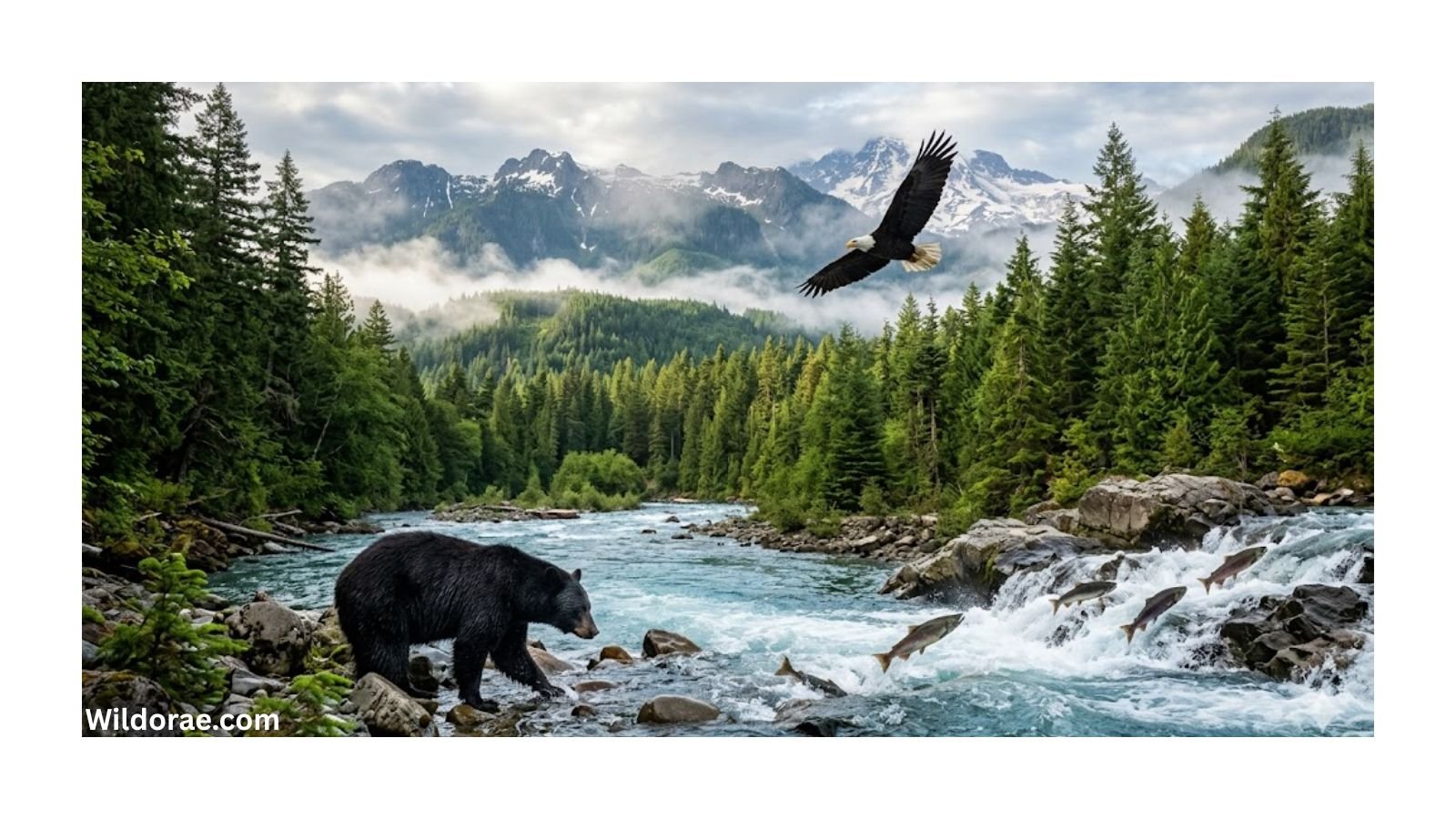
The wildlife in the Pacific Northwest captivates explorers, students, and wildlife lovers alike with its remarkable biodiversity. Picture ancient evergreen forests, roaring rivers, snowy mountains, and coastal seas all teeming with life. From the elusive gray wolf prowling dense woods to salmon fighting their way upstream, this region’s animals are both fascinating and vital to global ecology. The wildlife in the Pacific Northwest draws thousands of visitors yearly and inspires scientists who study its intricate food webs, animal behavior, and habitat dynamics.
|See also: Wildlife in daintree rainforest
Whether you’re a hiker drawn by elk grazing in alpine meadows or a kayaker scanning for bald eagles soaring overhead, understanding this wildlife enriches our appreciation of nature’s complexity. Today, wildlife faces mounting threats—from habitat fragmentation to climate change—making awareness and conservation more crucial than ever. This article explores key species, habitats, diets, and what we can do to protect these remarkable creatures.
Scientific Classification of Iconic Pacific Northwest Wildlife
The wildlife in the Pacific Northwest spans numerous animal groups and classifications. Below is a simplified snapshot of some representative species:
| Animal | Scientific Name | Group |
|---|---|---|
| Bald Eagle | Haliaeetus leucocephalus | Bird of prey |
| Orca (Killer Whale) | Orcinus orca | Marine mammal |
| Black Bear | Ursus americanus | Mammal |
| Gray Wolf | Canis lupus | Mammal |
| Salmon (Pacific species) | Oncorhynchus spp. | Fish |
| River Otter | Lontra canadensis | Mammal |
| This table provides foundational taxonomy for major species typical of Pacific Northwest ecosystems. |
Physical Characteristics: What Makes Them Unique
Breathe in the image of an orca arching through cool waters and a bald eagle slicing the sky with broad wings. Each species’ anatomy matches its lifestyle:
- Orca: Black-and-white coloring, streamlined body, up to 30 feet long.
- Bald Eagle: Dark brown body with a white head, powerful beak, and large wings for soaring.
- Black Bear: Strong limbs, varied coat colors, and sharp claws for climbing.
- Salmon: Sleek, silvery bodies that change during spawning runs.
- Gray Wolf: Long legs and keen senses for stalking prey.
These physical traits ensure survival across forests, rivers, and coastal zones.
Habitat and Distribution
Diverse Environments, Vast Wildlife Homes
The wildlife in the Pacific Northwest inhabits a mosaic of ecosystems, from misty rainforest valleys to rugged mountain peaks and deep coastal waters. Forests cover much of western Washington and Oregon, while rivers like the Columbia and Fraser provide freshwater corridors vital for salmon migrations. Marine mammals thrive in the Salish Sea and Pacific Ocean waters. As geography changes eastward, high desert and grasslands host different species altogether.
Key habitats include:
- Temperate rainforests: Shelter for deer, owl species, and carnivores.
- Rivers and estuaries: Pathways for salmon and eagles.
- Coastal waters: Homes to orcas, seals, and sea lions.
- Mountain meadows: Grazing areas for elk and forage for bears.
Diet and Hunting Behavior
What Eats What in the Wild
Food webs here are intricate. Salmon serve as keystone species by powering not only aquatic ecosystems but also forests when nutrients flow upstream. Bears, birds, and otters all benefit from salmon runs.
Feeding highlights:
- Orcas: Apex predators feeding on fish or marine mammals depending on ecotype.
- Bald Eagles: Mostly fish, occasionally carrion.
- Black Bears: Omnivores that eat berries, insects, and fish.
- Gray Wolves: Hunt deer, elk, and sometimes smaller mammals.
These diverse diets help maintain ecosystem balance.
Reproduction and Lifespan
Reproductive habits vary widely:
- Bald Eagles form monogamous pairs and return to the same nesting areas annually.
- Orcas live in matriarch-led pods, with calves staying close for life.
- Salmon undertake epic migrations to spawn, then die, completing a cycle that fuels other species.
- Wolves and Bears raise young in dens, teaching survival skills.
Lifespans also vary: eagles may live 20–30 years, wolves up to 10–13 years in the wild, and orcas often live several decades.
Behavior and Adaptations
The wildlife in the Pacific Northwest displays fascinating adaptations:
- Orcas use sophisticated social communication and group hunting.
- Salmon navigate thousands of miles to return to natal streams.
- Black Bears can hibernate or enter torpor based on food availability.
- Wolves coordinate pack hunting strategies to secure prey.
Such behaviors are vital to survival in varied and often harsh climates.
Threats and Conservation Status
Despite its thriving biodiversity, this region’s wildlife faces serious threats:
- Habitat loss from urban expansion and forestry.
- Climate change intensifying drought, wildfire, and sea level rise.
- Pollution and fishing pressures affecting sea life.
- Fragmented landscapes disrupting animal movement.
Some species, like certain salmon stocks and Southern Resident orcas, are endangered, while others struggle from habitat fragmentation. Sustainable land use and habitat protection efforts are essential for future resilience.
Interesting Facts
- Salmon are ecosystem engineers, moving nutrients from the ocean to forests.
- Orca pods have distinct cultures, with different hunting styles and diets in the Salish Sea.
- Bald eagle numbers rebounded after conservation action saved them from extinction.
- The Pacific Northwest is one of the most diverse wildlife regions in North America.
Summary
The wildlife in the Pacific Northwest is remarkable for its depth and diversity. From orcas navigating cold ocean waters to salmon fueling forests and bald eagles soaring high, each species plays a vital role in ecosystems that are both ancient and ever-changing. Yet these wild places face rising threats from climate change, habitat loss, and human development. Understanding, respecting, and protecting this wildlife not only enriches our lives but also supports global ecological health. With informed action and continued conservation, we can help preserve these species for future generations to enjoy and study.
FAQs (Optimized for Featured Snippets)
What animals are most iconic in the Pacific Northwest?
Iconic animals include orcas, bald eagles, black bears, gray wolves, and Pacific salmon.
Why is salmon important in this region?
Salmon are keystone species that transfer vital nutrients to forests and rivers, supporting many wildlife species.
Are gray wolves common in the Pacific Northwest?
Gray wolves are recovering in some areas but remain rare and protected due to past declines.
What threats do Pacific Northwest animals face?
Threats include habitat loss, climate change, pollution, and wildlife-human conflicts.
Where can you see orcas in the Pacific Northwest?
Orcas are often seen in the Salish Sea and coastal marine waters of Washington and British Columbia.
Conservation Awareness Message
The wildlife in the Pacific Northwest depends on healthy habitats and thoughtful conservation. Every person can help by supporting protected areas, reducing pollution, and respecting wildlife spaces. Our actions today shape the future of these incredible ecosystems. Let’s protect them.