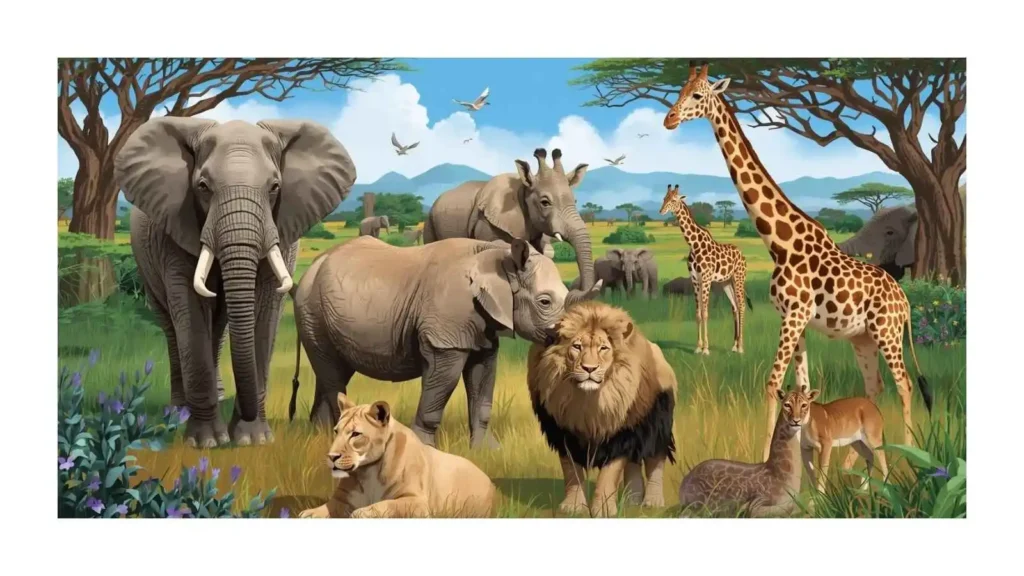
Many of Africa’s most well-known species are currently in danger of going extinct, despite the continent’s remarkable natural diversity. Africa’s endangered species, which include strong elephants that roam savannas and delicate antelopes hidden in dense forests, are seriously threatened by poaching, habitat degradation, and climate change.
In addition to being curious, people look up this topic because knowledge of these species can motivate conservation and practical action. We can develop a deeper appreciation for endangered creatures by learning about their habitats, behaviors, and the causes of their decline.
Furthermore, people are more inclined to support conservation initiatives and responsible wildlife tourism when they are informed. In an understandable and captivating manner, this essay examines important endangered African species, their biology, behaviors, threats, and fascinating facts.
|Learn about us: Lowland gorilla vs mountain gorilla
Scientific Classification
Below is a diagram table showing classifications of a few well-known endangered African animals:
| Animal | Kingdom | Phylum | Class | Order | Family |
|---|---|---|---|---|---|
| African Elephant | Animalia | Chordata | Mammalia | Proboscidea | Elephantidae |
| Black Rhinoceros | Animalia | Chordata | Mammalia | Perissodactyla | Rhinocerotidae |
| African Wild Dog | Animalia | Chordata | Mammalia | Carnivora | Canidae |
| Mountain Gorilla | Animalia | Chordata | Mammalia | Primates | Hominidae |
| Cheetah | Animalia | Chordata | Mammalia | Carnivora | Felidae |
| Grevy’s Zebra | Animalia | Chordata | Mammalia | Perissodactyla | Equidae |
These scientific names help researchers and wildlife lovers alike talk accurately about animals that are endangered in Africa.
Physical Characteristics
African Elephant
- Massive bodies with large ears and tusks
- Thick, gray wrinkled skin
- Trunks that act as hands
Black Rhinoceros
- Large, powerful build with two horns
- Pointed upper lip used to grasp leaves
African Wild Dog
- Slender body with patchy fur
- Long legs for running at high speed
Mountain Gorilla
- Heavy set, dark fur for cold highlands
- Big hands and feet
Cheetah
- Slim, fast body with black tear streaks
- Unique spotted coat for camouflage
Grevy’s Zebra
- Narrow stripes and big ears
- Taller and stockier than common zebras
These physical characteristics support survival in varied African environments.
Habitat and Distribution
African Elephant
- Lives in savannas, forests, and deserts
- Found in East and Southern Africa
Black Rhinoceros
- Prefers bushland, grassland, and thicket
- Located in Kenya, Namibia, South Africa
African Wild Dog
- Ranges across open plains and woodlands
- Many now live in fragmented populations
Mountain Gorilla
- Restricted to misty highlands in Uganda, Rwanda, and DRC
Cheetah
- Lives in grasslands and open plains
- Often found in Namibia and Botswana
Grevy’s Zebra
- Lives in semi-arid grasslands of Kenya and Ethiopia
These habitats are shrinking due to human expansion and climate changes, putting pressure on wildlife.
Diet and Hunting Behavior
African Elephant
- Herbivore — eats grasses, leaves, and bark
- Uses trunk to gather food
Black Rhinoceros
- Browser — eats shrubs, shoots, and leaves
African Wild Dog
- Carnivore — hunts cooperatively in packs
- Preys on antelope and small mammals
Mountain Gorilla
- Herbivore — eats leaves, stems, and fruit
Cheetah
- Carnivore — stalks and chases prey at high speed
- Eats gazelles and small ungulates
Grevy’s Zebra
- Herbivore — grazes on tough grasses
Understanding diet and hunting behavior helps explain why these animals need large home ranges.
Reproduction and Lifespan
Animals have varied life cycles and reproductive patterns:
- African Elephant:
- Long gestation (~22 months), long life (~60–70 years)
- Black Rhinoceros:
- Calves every 2–3 years, may live ~35–50 years
- African Wild Dog:
- Litters of 10+, life ~10–12 years
- Mountain Gorilla:
- Slow reproduction, life ~35–40 years
- Cheetah:
- Litters of 3–5, life ~10–12 years
- Grevy’s Zebra:
- Foals born after ~12–13 months, life ~20–30 years
These patterns influence population recovery potential in the wild.
Behavior and Adaptations
Elephants
- Highly social family groups
- Use trunks for communication and interaction
Black Rhinos
- Mostly solitary
- Excellent sense of smell
African Wild Dogs
- Pack hunters with complex social bonds
- Cooperative care for young
Mountain Gorillas
- Live in family bands led by a silverback male
- Use chest beating as communication
Cheetahs
- Built for speed, not strength
- Need open areas to hunt effectively
Grevy’s Zebra
- Territorial behavior
- Stripes may help deter flies
These behavioral adaptations show the complexity of survival strategies.
Threats and Conservation Status
Animals that are endangered in Africa face many threats:
- Poaching: Targeting elephants for tusks and rhinos for horns
- Habitat Loss: Farms, roads, and towns shrink natural ranges
- Human-Wildlife Conflict: Predators killed to protect livestock
- Genetic Bottlenecks: Small populations lead to inbreeding
Current Status (IUCN):
- African Elephant → Vulnerable/Endangered
- Black Rhinoceros → Critically Endangered
- African Wild Dog → Endangered
- Mountain Gorilla → Endangered
- Cheetah → Vulnerable
- Grevy’s Zebra → Endangered
Conservation Efforts:
- Anti-poaching patrols
- Protected reserves
- Community-based conservation programs
These steps help protect wildlife and local human interests.
Interesting Facts
- Elephants can communicate through vibrations felt in the ground.
- Rhinos have thick skin but are still vulnerable to poachers.
- Wild Dogs have a hunting success rate higher than lions or leopards.
- Mountain Gorillas share 98% of their DNA with humans.
- Cheetahs can go from 0–60 mph in just a few seconds.
- Grevy’s Zebras have the narrowest stripes among zebras.
These fascinating traits reflect unique evolutionary paths.
FAQs
1. What are the top endangered animals in Africa?
Some top endangered African species include the black rhinoceros, African wild dog, mountain gorilla, and Grevy’s zebra.
2. Why are African elephants endangered?
Elephants are mainly endangered due to poaching for ivory and habitat loss.
3. Can Africa’s endangered species recover?
With strong conservation and anti-poaching efforts, some species show signs of recovery.
4. What makes cheetahs vulnerable?
Cheetahs face habitat fragmentation and loss of prey due to human encroachment.
5. How do conservation programs help animals?
Programs protect habitats, educate communities, and enforce anti-poaching laws.
Summary
Animals that are endangered as a result of environmental changes and human pressures are among Africa’s amazing fauna. Every species, including zebras and elephants, is essential to ecosystems. Millions of years of evolution are reflected in their intricate life cycles, nutrition, and behaviors.
Dedicated conservation efforts are assisting in the protection of these magnificent animals despite ongoing concerns including habitat loss and poaching. Individuals and organizations can make better decisions to maintain biodiversity by having a greater understanding of the needs of endangered species in Africa.
Coordinated international action, local involvement, and ongoing education are essential to the future of these species.
Conservation Awareness Message
Saving endangered African animals is not just about preserving beauty. It is about safeguarding ecosystems that support life on Earth.
You can help by supporting conservation organizations, choosing responsible wildlife tourism, and spreading awareness about the plight of Africa’s endangered species. Every voice and action makes a difference.