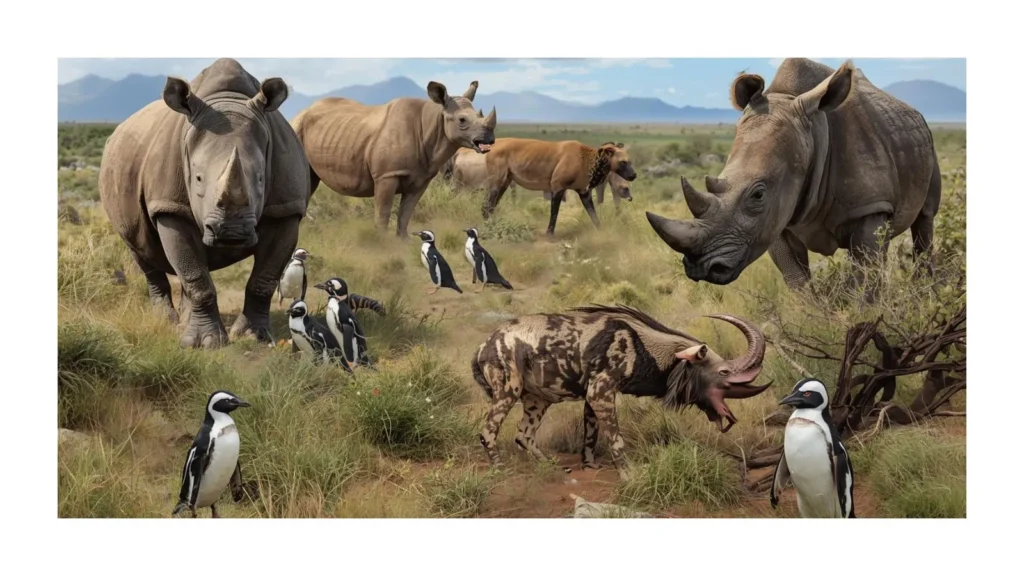
South Africa is home to an extraordinary variety of wildlife, yet many species are at risk due to human activity and environmental changes. Endangered animals in South Africa include iconic creatures like the black rhinoceros, African wild dog, and African penguin. Protecting these species requires understanding their habitat and distribution, behavior and adaptations, and diet and hunting patterns.
|Related: Lowland gorilla vs mountain gorilla
Conservation efforts also involve addressing threats and conservation status while educating the public about wildlife protection strategies. By exploring these unique animals, their ecological roles, and the challenges they face, we can raise awareness and inspire actions that preserve South Africa’s remarkable biodiversity for generations to come.
Black Rhinoceros
Scientific Classification
| Category | Detail |
|---|---|
| Kingdom | Animalia |
| Phylum | Chordata |
| Class | Mammalia |
| Order | Perissodactyla |
| Family | Rhinocerotidae |
| Genus | Diceros |
| Species | D. bicornis |
Physical Characteristics
Black rhinoceros are large, robust herbivores with two horns. Their skin is thick and gray, with folds that protect from thorny bushes.
Habitat and Distribution
They occupy savanna scrub and woodlands primarily in eastern and southern provinces, such as KwaZulu‑Natal and Eastern Cape.
Diet and Hunting Behavior
Despite size, they are browsers, feeding on twigs, branches, and shrubs. They rarely drink water, preferring moisture within plants.
Reproduction and Lifespan
Females usually bear one calf every 2–3 years after a year‑long pregnancy. Lifespan ranges from 35–50 years.
Behavior and Adaptations
Rhinos use keen smell and hearing to sense danger. Their prehensile upper lip helps them grasp branches.
Threats and Conservation Status
- Poaching for horns
- Habitat fragmentation
Listed as Critically Endangered. Anti‑poaching units and sanctuaries aid survival.
Interesting Facts
- Rhinos can weigh over 1,400 kg.
- Their horns are made of keratin—same material as hair and nails.
African Wild Dog
Scientific Classification
| Category | Detail |
|---|---|
| Kingdom | Animalia |
| Phylum | Chordata |
| Class | Mammalia |
| Order | Carnivora |
| Family | Canidae |
| Genus | Lycaon |
| Species | L. pictus |
Physical Characteristics
Wild dogs have patchy coats of yellow, black, and white. Lean and agile, they have large ears for heat dissipation.
Habitat and Distribution
They roam savannas and woodlands. Populations are scattered, with strongholds in Limpopo and Kruger regions.
Diet and Hunting Behavior
These carnivores hunt cooperatively in packs, chasing antelope like impala at high speeds.
Reproduction and Lifespan
Dominant pairs breed, producing litters of 10+ pups. Wild dogs live 10–12 years in the wild.
Behavior and Adaptations
Teamwork defines them; pack members care for sick or young. Communication occurs through chirps and squeaks.
Threats and Conservation Status
- Habitat loss
- Human conflict
- Diseases from domestic dogs
Classified as Endangered, wildlife corridors help connect habitats.
Interesting Facts
- They have the highest hunting success of all large carnivores.
African Penguin
Scientific Classification
| Category | Detail |
|---|---|
| Kingdom | Animalia |
| Phylum | Chordata |
| Class | Aves |
| Order | Sphenisciformes |
| Family | Spheniscidae |
| Genus | Spheniscus |
| Species | S. demersus |
Physical Characteristics
African penguins have black backs and white fronts with a distinctive black band across the chest.
Habitat and Distribution
They live along the South African and Namibian coasts, nesting on islands and rocky shores.
Diet and Hunting Behavior
They feed on small fish like sardines and anchovies, adept at diving and swimming.
Reproduction and Lifespan
Penguins lay two eggs. Both parents share incubation duties. Lifespan is 10–15 years.
Behavior and Adaptations
Their bodies are streamlined for agile swimming. Eggs are incubated in burrows to protect from heat.
Threats and Conservation Status
- Overfishing reduces food supply
- Oil spills and habitat disturbance
The species is Endangered; protected colonies and fishing limits help recovery.
Interesting Facts
- These penguins can drink seawater thanks to special glands.
Table: Endangered Species Snapshot
| Species | Status | Main Threats |
|---|---|---|
| Black Rhinoceros | Critically Endangered | Poaching, habitat loss |
| African Wild Dog | Endangered | Fragmentation, disease |
| African Penguin | Endangered | Food scarcity, oil pollution |
General Behavior and Adaptations
Wildlife in South Africa exhibits incredible adaptations:
- Camouflage coats to hide from predators
- Social structures for protection and survival
- Seasonal movements to find food and water
These traits help endangered animals persist despite pressures.
Why Protection Matters
Protecting these species benefits ecosystems and people:
- Ecological balance: Predators and herbivores control populations.
- Tourism value: Wildlife tourism supports local economies.
- Cultural heritage: These animals are symbols of natural heritage.
Threats and Conservation Status
Endangered animals in South Africa face:
- Poaching and illegal trade
- Habitat fragmentation and development
- Climate change effects
- Competition with livestock
Conservation groups work with governments to implement sanctuaries, anti‑poaching units, and habitat protection laws.
Interesting Facts
- South Africa is one of the big five conservation regions.
- Wild dogs have unique, patchwork coats—no two are alike.
- African penguins once numbered millions but have declined sharply.
FAQs
1. What are the top endangered animals in South Africa?
Black rhinoceros, African wild dog, and African penguin are among the top endangered species.
2. Why are these animals endangered?
Primary causes include poaching, habitat loss, and reduced food supplies.
3. Can these species recover?
Yes, with strong conservation laws, habitat protection, and anti‑poaching efforts.
4. How can people help?
Support wildlife organizations, adopt sustainable tourism, and spread awareness.
5. Where can I see these animals?
Protected reserves like Kruger National Park and coastal sanctuaries host these species.
Summary
In conclusion, conserving endangered animals in South Africa is crucial for maintaining ecological balance and protecting biodiversity. Effective strategies include anti-poaching measures, habitat restoration, and wildlife education programs. Understanding species’ reproduction and lifespan, physical characteristics, and social behavior helps inform conservation planning.
Governments, NGOs, and local communities must collaborate to ensure survival of species like black rhinos, African wild dogs, and African penguins. By applying scientific classification and monitoring populations, we can prevent further declines. Ultimately, proactive conservation not only preserves wildlife but also supports sustainable tourism and natural heritage, ensuring South Africa’s iconic species thrive for future generations.
Conservation Awareness Message
Protecting endangered animals in South Africa is essential for a thriving planet. By supporting conservation, reducing poaching, and preserving habitats, we ensure these magnificent creatures endure for future generations.