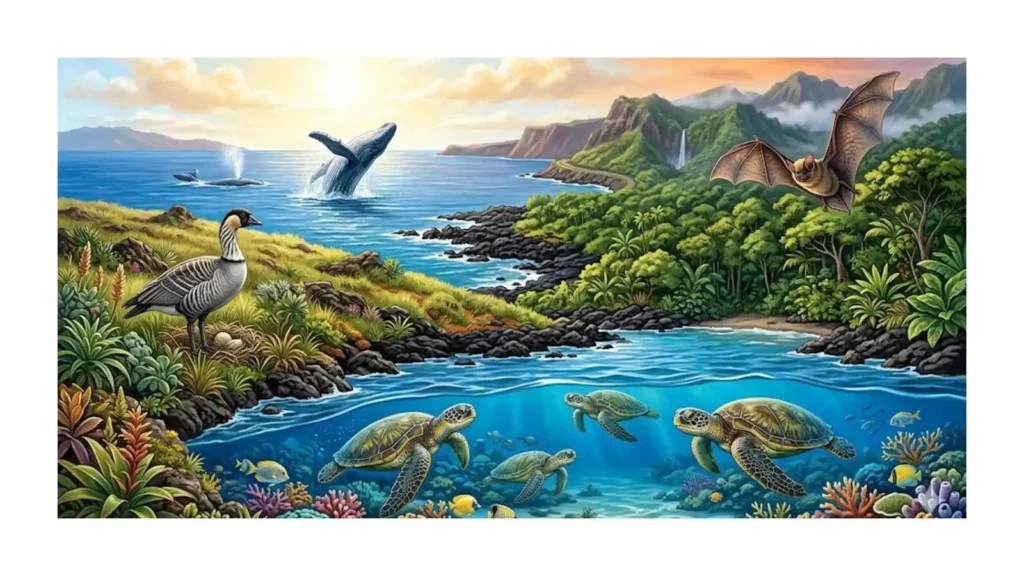
Maui’s wild places are more than pretty views — they are living theatres of evolution, survival, and breathtaking encounters. Nestled in the central Pacific Ocean, this volcanic island harbors a blend of native, endemic, and introduced animals that reflect millions of years of isolation and change. From the ancient honu gliding through tropical waters to the rare Hawaiian hoary bat flitting at dusk in forest canopies, each creature tells a story of adaptation and resilience.
|Related: wildlife in the pacific northwest
Yet, Maui’s wildlife also faces pressure from habitat loss, introduced predators, and human disturbance. Understanding these animals — their biology, behavior, and conservation — not only enhances your visit but also highlights why caring for Maui’s biodiversity matters. In this article, we explore the most iconic and intriguing wild animals in Maui, including how they live, what threatens them, and what makes them unique in the Pacific ecosystem.
Scientific Classification of Key Maui Wildlife
| Common Name | Scientific Name | Type |
|---|---|---|
| Hawaiian green sea turtle (Honu) | Chelonia mydas | Marine reptile |
| Hawaiian monk seal | Monachus schauinslandi | Marine mammal |
| Nēnē goose | Branta sandvicensis | Bird |
| Hawaiian hoary bat | Lasiurus cinereus semotus | Mammal |
| Axis deer (introduced) | Axis axis | Mammal |
| Mongoose (introduced) | Herpestes javanicus | Mammal |
| Humpback whale | Megaptera novaeangliae | Marine mammal |
| This list showcases some of the most commonly seen wild animals in Maui. |
Physical Characteristics
Ocean Giants and Turtle Guardians
- Honu (green sea turtle): Large, olive‑green shell and a slow, graceful swim. Adult shells can exceed 3 feet across.
- Humpback whale: Majestic, long pectoral fins and dramatic breaches; males produce complex songs during migration.
Forest and Field Fauna
- Nēnē goose: Medium‑sized waterfowl with patterned neck and sand‑colored plumage.
- Hawaiian hoary bat: Brownish fur with silver tipping; small and agile at dusk.
- Axis deer: Slender body, spotted coat, graceful legs.
Introduced Mammals
- Mongoose: Weasel‑like body, agile and quick.
These descriptions help you identify Maui’s animals in the wild.
Habitat and Distribution
Wild animals in Maui live in distinct environments shaped by elevation, ocean proximity, and vegetation.
- Marine habitats: Coral reefs, sandy beaches, and deep offshore waters are home to turtles, whales, dolphins, and rays.
- Coastal shores: Hawaiian monk seals haul out on remote beaches and sandbanks.
- Forests and uplands: Nēnē graze grasslands and volcanic slopes, while hoary bats forage in forest edges at twilight.
- Human‑modified landscapes: Axis deer and mongooses roam forest edges, fields, and near roadsides due to their adaptation to open spaces.
Diet and Hunting Behavior
What They Eat
- Honu (Green sea turtle): Algae, sea grasses, and sometimes sponges — primarily herbivorous as adults.
- Humpback whale: Tiny krill and small fish filtered while swimming with open mouths.
- Nēnē: Grasses, seeds, berries, and flowers.
- Hawaiian hoary bat: Nocturnal insect hunter — catches moths and beetles on the wing.
- Axis deer: Browses grasses and shrubs, altering plant communities.
- Mongooses: Opportunistic predator eating insects, eggs, and small animals.
Hunting & Foraging Strategies
- Sea turtles graze slowly along reef flats.
- Whales use bubble netting and synchronized lunges for feeding (seasonal).
- Bats emit echolocation calls to find insects in low light.
Knowing diets helps conservationists protect critical food resources and manage invasive species effects.
Reproduction and Lifespan
| Species | Breeding Pattern | Typical Lifespan |
|---|---|---|
| Hawaiian green sea turtle | Nesting on beaches every 2–4 years | 60–100+ yrs |
| Hawaiian monk seal | Year‑round pupping | ~25–30 yrs |
| Nēnē goose | Monogamous pairs | ~10–15 yrs |
| Hawaiian hoary bat | Single pups per year | ~5–7 yrs |
| Axis deer | Year‑round breeding | ~12 yrs |
| Mongoose | Multiple litters per year | ~6–8 yrs |
Most native species have slow reproduction, making them vulnerable to disruptions. Introduced species often reproduce faster than natives, exacerbating ecological imbalance.
Behavior and Adaptations
Maui’s animals show remarkable adaptations to island life:
- Sea turtles return to ancestral beaches to nest.
- Humpback whales migrate vast distances to Maui’s warm waters in winter.
- The nēnē’s reduced webbing on its feet suits lava and rough terrain.
- Hawaiian hoary bats evolved flight to exploit nocturnal insects.
- Axis deer and mongooses lack natural predators, allowing populations to explode.
These adaptations reflect survival strategies in a geographically isolated ecosystem.
Threats and Conservation Status
Maui’s wildlife faces serious threats:
- Habitat loss: Urban expansion and agriculture reduce native forests.
- Introduced predators: Mongooses and feral cats eat eggs and small birds.
- Diseases: Avian malaria spread by mosquitoes threatens native birds at lower elevations.
- Invasive competitors: Axis deer damage plant communities and contribute to erosion.
- Climate change: Rising temperatures shift habitats and affect ocean ecosystems.
Conservation programs, including nest protection, invasive species control, and habitat restoration, are essential to prevent declines.
Interesting Facts
- Only native land mammal: The Hawaiian hoary bat is Maui’s sole indigenous terrestrial mammal.
- Honus can live over 100 years: These ancient reptiles are symbols of longevity.
- Nēnē is state bird: It nearly went extinct due to predators and habitat loss.
- Humpback whales travel thousands of miles: Adults migrate from Alaska every winter.
- Introduced species dominate: Many mammals seen on Maui were introduced and are now considered invasive.
FAQs (Optimized for Featured Snippets)
1. What are common wild animals in Maui?
Common wild animals in Maui include the green sea turtle, humpback whale, nēnē goose, Hawaiian monk seal, hoary bat, axis deer, and mongoose.
2. Which wild animals are native to Maui?
Native species include the green sea turtle, Hawaiian monk seal, nēnē, and the Hawaiian hoary bat — all originating without human introduction.
3. Why are axis deer a problem in Maui?
Axis deer are invasive, with no natural predators, causing habitat damage, crop loss, and competition with native plants and animals.
4. Can you see humpback whales near Maui?
Yes — humpback whales migrate to Maui’s waters each winter for mating and calving, making them visible from shore or on boat tours.
5. How can tourists view wildlife safely in Maui?
Maintain respectful distances, avoid feeding or touching wild animals, and follow park guidelines to protect both humans and wildlife.
Summary
Maui’s wildlife is a mosaic of unique native species, ocean giants, colorful birds, and introduced mammals. Wild animals in Maui include ancient sea turtles, majestic humpback whales, forest‑dwelling nēnē geese, and the elusive Hawaiian hoary bat. These creatures reflect the island’s evolutionary isolation, diverse habitats, and complex ecological pressures.
While introduced species like axis deer and mongooses are common, native species often struggle due to habitat loss, invasive predators, and disease. Conservation efforts play a key role in protecting Maui’s biodiversity so future generations can continue to witness its wild wonders.