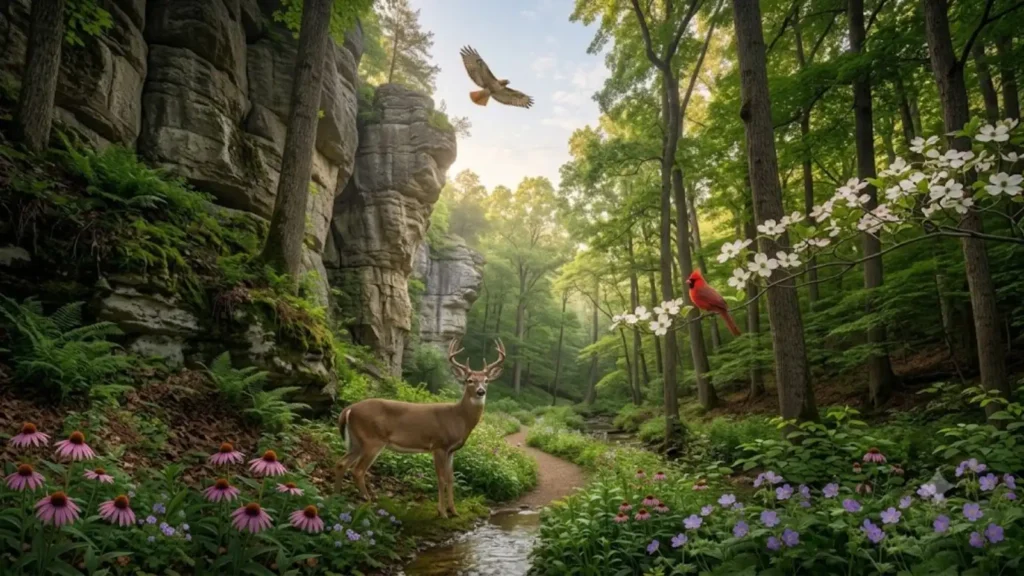
If you enjoy peaceful forests, scenic hiking trails, and diverse wildlife, War Bluff Valley Wildlife Sanctuary deserves a place on your travel list. Located in the heart of Pope County, Southern Illinois, this protected natural area offers visitors a chance to experience untouched woodlands, dramatic limestone bluffs, and a rich variety of native plants and animals. The sanctuary serves as both a wildlife refuge and an outdoor classroom where nature lovers can explore unique ecosystems while supporting conservation efforts. Whether you are an experienced hiker, birdwatcher, wildlife photographer, or simply looking for a quiet escape, War Bluff Valley Wildlife Sanctuary provides an unforgettable experience. Its beautiful landscapes and commitment to preserving biodiversity make it one of Southern Illinois’ most valuable natural treasures.
RELATED: Wildlife on the Oregon Trail
War Bluff Valley Wildlife Sanctuary: Quick Answer
War Bluff Valley Wildlife Sanctuary is a protected nature reserve in Pope County, Illinois, adjacent to the Shawnee National Forest. Covering nearly 500 acres, the sanctuary protects forests, limestone bluffs, streams, and native wildlife. It is managed to preserve natural habitats while providing opportunities for hiking, birdwatching, photography, environmental education, and wildlife observation.
Quick Facts About War Bluff Valley Wildlife Sanctuary
| Feature | Details |
|---|---|
| Location | Pope County, Southern Illinois |
| State | Illinois |
| Size | Nearly 500 acres |
| Nearby Forest | Shawnee National Forest |
| Habitat | Hardwood forests, limestone bluffs, valleys, streams |
| Popular Activities | Hiking, birdwatching, wildlife photography, nature walks |
| Best Time to Visit | Spring and Fall |
| Known For | Biodiversity, scenic landscapes, conservation |
Where Is War Bluff Valley Wildlife Sanctuary?
War Bluff Valley Wildlife Sanctuary lies in Pope County, Illinois, one of the most scenic regions in the state. The sanctuary borders the famous Shawnee National Forest, allowing wildlife to move freely between protected habitats.
Unlike crowded tourist attractions, this sanctuary offers a peaceful atmosphere where visitors can enjoy nature without large crowds. Rolling hills, rocky cliffs, shaded valleys, and seasonal streams create an ideal environment for countless plant and animal species.
Its remote location also makes it perfect for visitors seeking quiet hiking trails and natural scenery away from busy cities.
History of War Bluff Valley Wildlife Sanctuary
The sanctuary was established to protect one of Southern Illinois’ most ecologically valuable landscapes. Conservation groups recognized that the area’s forests, limestone formations, and native wildlife habitats required long-term protection from development.
Today, careful land management helps preserve the sanctuary’s natural ecosystems while allowing visitors to appreciate its beauty responsibly.
The sanctuary also supports scientific research and environmental education. Students, naturalists, photographers, and bird enthusiasts regularly visit to learn about native ecosystems and conservation practices.
Thanks to continued preservation efforts, much of the landscape remains largely unchanged, providing a glimpse into the natural environment that existed long before modern development.
Wildlife at War Bluff Valley Wildlife Sanctuary
One of the sanctuary’s greatest attractions is its impressive diversity of wildlife. Healthy forests and protected habitats allow many native species to thrive throughout the year.
Visitors may encounter:
- White-tailed deer
- Wild turkey
- Red fox
- Gray squirrel
- Raccoons
- Eastern chipmunks
- Box turtles
- Various snake species
- Salamanders
- Frogs
The sanctuary also supports many pollinators, including butterflies, native bees, and dragonflies that contribute to healthy ecosystems.
Because the area experiences relatively little human disturbance, wildlife often behaves naturally, making the sanctuary an excellent destination for wildlife observation and photography.
Birdwatching Opportunities
Birdwatchers consider War Bluff Valley Wildlife Sanctuary an excellent location for spotting both resident and migratory birds.
Depending on the season, visitors may see:
- Red-tailed Hawks
- Barred Owls
- Pileated Woodpeckers
- Northern Cardinals
- Carolina Wrens
- Blue Jays
- American Goldfinches
- Wild Turkeys
- Eastern Bluebirds
Spring migration is especially rewarding, as numerous songbirds travel through Southern Illinois.
Early mornings often provide the best opportunities for bird photography because wildlife activity is highest during cooler hours.
Plant Life and Natural Habitats
War Bluff Valley Wildlife Sanctuary protects a wide range of natural habitats that support remarkable biodiversity.
These habitats include:
Mature Hardwood Forests
Large oak and hickory trees dominate much of the landscape. These forests provide food and shelter for mammals, birds, reptiles, and countless insects.
Limestone Bluffs
Towering limestone cliffs create dramatic scenery while supporting unique plant communities that thrive in rocky environments.
Valleys and Ravines
Cool, shaded valleys help moisture-loving plants flourish. Ferns, mosses, and native wildflowers grow abundantly throughout these areas.
Seasonal Streams
Small streams flow through portions of the sanctuary, providing water for wildlife and creating habitats for amphibians and aquatic insects.
Together, these diverse ecosystems make the sanctuary one of Southern Illinois’ richest natural environments.
Hiking Through the Sanctuary
Hiking remains one of the best ways to experience War Bluff Valley Wildlife Sanctuary.
Visitors can enjoy peaceful woodland trails that pass through forests, rocky ridges, and scenic overlooks. Along the way, hikers often encounter wildflowers, birds, butterflies, and breathtaking views of the surrounding landscape.
Trail conditions vary throughout the year, making sturdy hiking shoes a wise choice. Spring and autumn offer comfortable temperatures and spectacular scenery, while summer provides lush green forests full of wildlife activity.
The quiet surroundings allow visitors to disconnect from everyday life and reconnect with nature in one of Illinois’ most beautiful protected landscapes.
Best Time to Visit War Bluff Valley Wildlife Sanctuary
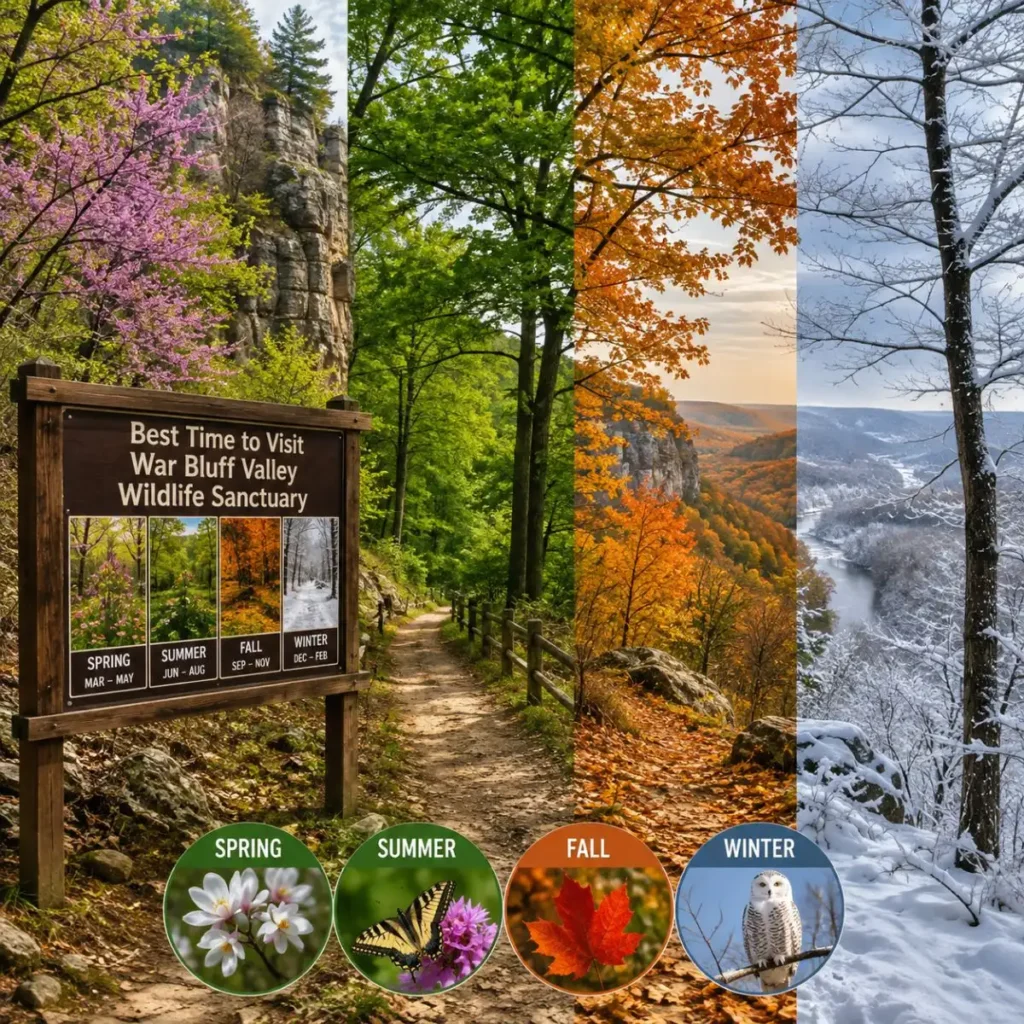
Every season offers a unique experience at War Bluff Valley Wildlife Sanctuary, but spring and fall are especially popular among nature lovers.
Spring (March to May)
Spring transforms the sanctuary into a colorful landscape filled with blooming wildflowers and fresh greenery. Migratory birds return, making this season ideal for birdwatching and wildlife photography. Pleasant temperatures also make hiking more enjoyable.
Summer (June to August)
Summer brings dense forests, active wildlife, and long daylight hours. Although temperatures can rise, the shaded woodland trails provide a comfortable escape for hikers and photographers.
Fall (September to November)
Many visitors consider fall the best time to explore the sanctuary. The forests display brilliant shades of red, orange, and gold, creating stunning scenery. Cooler weather also encourages wildlife activity throughout the day.
Winter (December to February)
Winter offers peaceful hiking opportunities and excellent visibility through leafless trees. Animal tracks become easier to spot, giving visitors a different perspective on the sanctuary’s wildlife.
Things to Do at War Bluff Valley Wildlife Sanctuary
Whether you visit for a few hours or an entire day, the sanctuary offers plenty of outdoor activities.
Hiking
Walking through the forest trails allows visitors to experience the sanctuary’s diverse landscapes, including hardwood forests, rocky bluffs, and peaceful valleys.
Wildlife Watching
Bring binoculars and quietly observe native animals in their natural habitats. Early mornings and late afternoons usually provide the best viewing opportunities.
Birdwatching
The sanctuary attracts numerous resident and migratory birds throughout the year. Bird enthusiasts often visit during spring and fall migrations.
Nature Photography
Photographers can capture breathtaking landscapes, colorful wildflowers, towering trees, dramatic limestone cliffs, and a variety of wildlife.
Plant Identification
Native trees, shrubs, ferns, mosses, and seasonal wildflowers make the sanctuary an excellent destination for botany enthusiasts and students.
Relaxing in Nature
Many visitors simply enjoy the peaceful environment, fresh air, and quiet surroundings that provide a welcome break from busy daily life.
Conservation Efforts
One of the sanctuary’s primary goals is protecting Southern Illinois’ natural ecosystems for future generations.
Conservation work includes:
- Preserving native forests
- Protecting wildlife habitats
- Restoring natural vegetation
- Monitoring local wildlife populations
- Controlling invasive plant species
- Supporting environmental education
- Encouraging responsible recreation
These efforts help maintain healthy ecosystems while preserving biodiversity across the region.
Photography Tips
War Bluff Valley Wildlife Sanctuary offers countless opportunities for nature photography.
To capture the best images:
- Visit shortly after sunrise.
- Use a zoom lens for wildlife photography.
- Stay patient and quiet.
- Respect animal habitats.
- Avoid disturbing nesting birds.
- Photograph landscapes during golden hour.
- Capture seasonal colors for dramatic images.
Natural light combined with the sanctuary’s scenic landscapes creates beautiful photography throughout the year.
Visitor Guidelines
Following a few simple guidelines helps protect the sanctuary and its wildlife.
- Stay on designated trails.
- Carry out all trash.
- Do not feed wildlife.
- Respect protected habitats.
- Leave plants and flowers undisturbed.
- Keep noise levels low.
- Observe animals from a safe distance.
- Follow posted rules and safety signs.
Responsible visitors help preserve this remarkable natural area for future generations.
Nearby Attractions
If you have extra time, consider exploring nearby destinations in Southern Illinois.
Shawnee National Forest
Located next to the sanctuary, this national forest features scenic drives, waterfalls, hiking trails, and outstanding wildlife viewing opportunities.
Garden of the Gods Recreation Area
Known for its breathtaking rock formations and panoramic overlooks, this destination attracts hikers, photographers, and outdoor enthusiasts from across the country.
Bell Smith Springs
This picturesque area offers clear streams, natural rock bridges, and peaceful hiking trails surrounded by lush forests.
Together, these attractions create an unforgettable outdoor adventure in Southern Illinois.
Why Visit War Bluff Valley Wildlife Sanctuary?
Unlike heavily developed parks, War Bluff Valley Wildlife Sanctuary remains peaceful and largely untouched.
Visitors appreciate:
- Beautiful natural scenery
- Quiet hiking trails
- Rich wildlife diversity
- Excellent birdwatching
- Scenic photography locations
- Native plant communities
- Family-friendly outdoor experiences
- Strong conservation values
Whether you seek adventure or relaxation, the sanctuary provides an authentic connection with nature.
Frequently Asked Questions
Is War Bluff Valley Wildlife Sanctuary open to the public?
Yes. Visitors can explore the sanctuary while following posted rules and conservation guidelines.
Where is War Bluff Valley Wildlife Sanctuary located?
It is located in Pope County, Southern Illinois, adjacent to the Shawnee National Forest.
What animals live in the sanctuary?
Common wildlife includes white-tailed deer, wild turkeys, foxes, squirrels, owls, hawks, woodpeckers, reptiles, amphibians, and many songbirds.
When is the best time to visit?
Spring and fall offer pleasant weather, colorful scenery, and excellent opportunities for birdwatching and hiking.
Can visitors take photographs?
Yes. Nature and wildlife photography are popular activities, provided visitors respect wildlife and remain on designated trails.
Is the sanctuary suitable for families?
Yes. Families, students, hikers, photographers, and nature enthusiasts can all enjoy the sanctuary while practicing responsible outdoor recreation.
Why is the sanctuary important?
The sanctuary protects valuable forests, wildlife habitats, and native biodiversity while supporting environmental education and conservation.
Conclusion
War Bluff Valley Wildlife Sanctuary is one of Southern Illinois’ hidden natural treasures. Its mature forests, towering limestone bluffs, scenic valleys, and abundant wildlife create an unforgettable destination for hikers, photographers, birdwatchers, and anyone who appreciates nature. Beyond its beauty, the sanctuary plays an essential role in protecting native ecosystems and promoting environmental stewardship. Every visit offers an opportunity to experience peaceful landscapes while supporting conservation efforts that benefit future generations. Whether you come for wildlife observation, outdoor recreation, or simply to reconnect with nature, War Bluff Valley Wildlife Sanctuary delivers a rewarding and memorable experience.