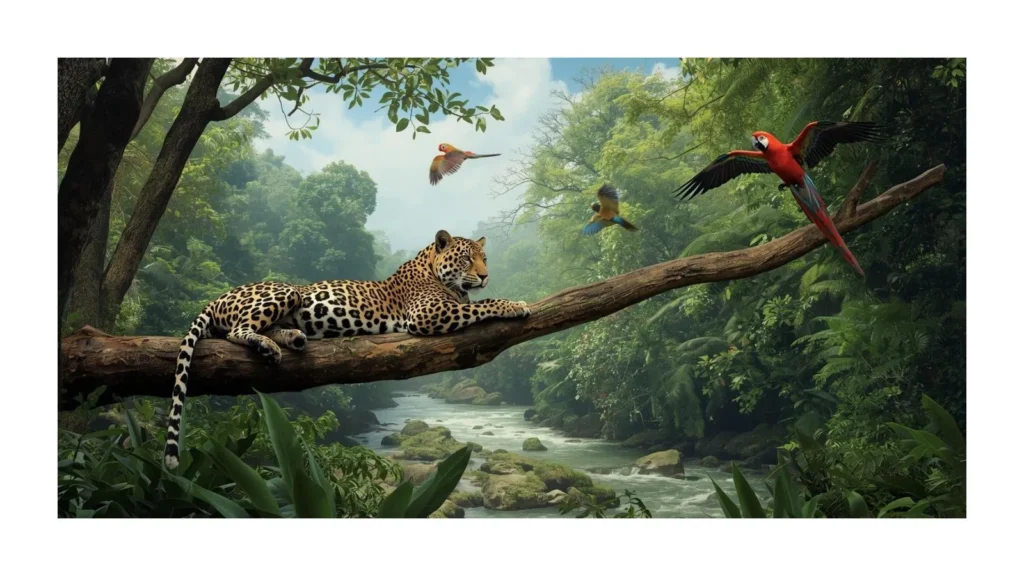
Deep within South America lies a country bursting with life—Peru. From the dense Amazon rainforest to the towering Andes Mountains, the wild animals of Peru create one of the richest ecosystems on Earth. Many travelers and nature lovers search for this topic to explore rare species, understand biodiversity, and learn how wildlife survives in extreme environments.
|See also: wild animals in northern california
Interestingly, Peru hosts over 1,800 bird species and hundreds of mammals, reptiles, and amphibians. This makes it a global hotspot for wildlife diversity. Moreover, the mix of climates supports animals found nowhere else. In this guide, you will discover the most fascinating wild animals of Peru, their habitats, behaviors, and survival strategies.
Scientific Classification
Peru’s wildlife includes mammals, birds, reptiles, and amphibians classified under kingdoms Animalia, with diverse families like Felidae, Ursidae, and Psittacidae across ecosystems.
Physical Characteristics
Each species among the wild animals of Peru shows unique physical traits adapted to its environment.
Example:
- Jaguar – muscular body, spotted coat for camouflage
- Andean condor – massive wingspan up to 3 meters
- Poison dart frog – bright colors warn predators
- Sloth – slow-moving with long claws for tree grip
These features help animals survive harsh conditions. Bright colors may warn danger, while dull tones help animals hide.
Habitat and Distribution
Peru’s geography creates varied habitats, making it ideal for diverse wildlife.
Major habitats include:
- Amazon Rainforest – home to jaguars, monkeys, and snakes
- Andes Mountains – habitat for llamas and spectacled bears
- Coastal regions – sea lions and seabirds
- Cloud forests – rare birds and insects
Because of these ecosystems, the wild animals of Peru thrive in both tropical heat and cold mountain climates.
Diet and Hunting Behavior
Diet varies widely depending on the species.
Carnivores:
- Jaguars hunt deer, fish, and small mammals
- Harpy eagles catch monkeys and sloths
Herbivores:
- Llamas feed on grass and plants
- Tapirs eat fruits and leaves
Omnivores:
- Spectacled bears consume fruits, insects, and small animals
Interestingly, many predators use stealth and patience rather than speed. This helps conserve energy in dense forests.
Reproduction and Lifespan
Reproduction among the wild animals of Peru depends on species and habitat conditions.
- Jaguars give birth to 1–4 cubs
- Sloths usually have one baby at a time
- Birds like macaws lay eggs in tree nests
Lifespan examples:
- Jaguar: 12–15 years in the wild
- Condor: up to 50 years
- Sloth: around 20 years
Parental care is strong in many species, especially mammals and birds.
Behavior and Adaptations
Survival requires smart adaptations.
Key adaptations include:
- Camouflage to avoid predators
- Nocturnal behavior to escape heat
- Strong claws for climbing
- Loud calls for communication
For example, sloths move slowly to avoid detection, while frogs use bright colors as warning signals. These behaviors help the wild animals of Peru survive in challenging environments.
Threats and Conservation Status
Sadly, many wild animals of Peru face serious threats.
Main dangers:
- Deforestation
- Illegal hunting
- Climate change
- Habitat loss
Conservation efforts:
- National parks like Manu and Tambopata
- Wildlife protection laws
- Eco-tourism awareness
Some species, like the spectacled bear, are now endangered. Protecting habitats is essential for their survival.
Interesting Facts
- Peru has one of the highest biodiversity levels in the world
- The Amazon River supports thousands of aquatic species
- The Andean condor is one of the largest flying birds
- Pink river dolphins live in Peruvian waters
- Some frogs in Peru are highly poisonous
Wildlife Comparison Table
| Animal | Habitat | Diet | Special Feature |
|---|---|---|---|
| Jaguar | Rainforest | Carnivore | Strong bite force |
| Sloth | Trees | Herbivore | Slow movement |
| Condor | Mountains | Scavenger | Huge wingspan |
| Tapir | Forest | Herbivore | Long snout |
FAQs
1. What are the most famous wild animals of Peru?
Jaguars, sloths, llamas, condors, and pink river dolphins are among the most famous.
2. Where can I see wildlife in Peru?
The Amazon rainforest and national parks are the best places.
3. Are wild animals in Peru dangerous?
Some animals can be dangerous, but most avoid humans.
4. What is Peru known for in wildlife?
Peru is known for its biodiversity and rare species.
5. How can tourists protect wildlife?
By following eco-tourism rules and not disturbing animals.
Summary
The wild animals of Peru represent one of the richest ecosystems on Earth. From powerful jaguars to colorful frogs, each species plays a role in maintaining balance. Peru’s diverse habitats support unique wildlife that cannot be found elsewhere. However, threats like deforestation and climate change are putting pressure on these animals.
Learning about their behavior, diet, and habitats helps us understand their importance. Protecting wildlife ensures future generations can also enjoy this natural beauty.