Imagine walking outside after sunset and hearing a strange sound in the distance. First, it sounds like a dog barking. Then, the noise changes into a long, eerie cry that almost sounds human. Naturally, you may wonder, what animal barks like a dog and howls like a human?
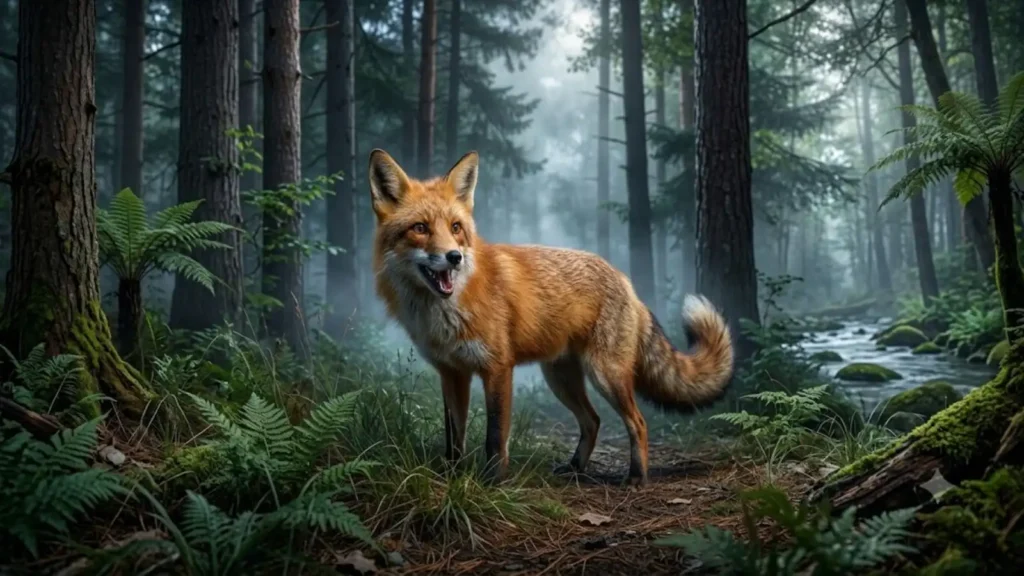
In many cases, the answer is a fox, especially a red fox. Foxes are surprisingly vocal animals and can produce several unusual calls, including barks, screams, yelps, and other high-pitched sounds. Their eerie vocalizations can sound remarkably different from what people expect from a small wild animal.
However, foxes are not the only possibility. Coyotes, wolves, and even domestic dogs can make similar nighttime sounds. Therefore, identifying the animal requires paying attention to the sound, location, timing, and surrounding habitat.
RELATED: Wilderness Wildlife Center Bulger PA
What Animal Barks Like a Dog and Howls Like a Human?
The red fox is one of the most likely animals behind this unusual description.
Foxes belong to the Canidae family, the same biological family that includes dogs, wolves, and coyotes. As a result, their vocal anatomy allows them to produce sounds that sometimes remind us of familiar canine calls.
A fox may make a short, sharp bark that resembles a small dog. It can also produce a piercing scream that sounds surprisingly human. These sounds can be especially startling when you hear them at night without seeing the animal responsible.
Fox vocalizations serve different purposes. They may help animals communicate, defend territory, attract mates, warn others, or maintain contact across distance.
Why Does a Fox Bark Like a Dog?
Foxes use barking as one part of their communication system.
A fox bark is usually sharper and higher-pitched than the bark of a typical domestic dog. You might hear several short calls repeated across a wooded area or neighborhood.
This sound can function as a contact call, allowing foxes to communicate with other foxes over some distance. It may also occur during territorial interactions or situations where the animal feels threatened.
However, a fox does not necessarily bark because it wants to attack something. In fact, barking is normal wildlife communication.
Therefore, hearing repeated barking from a wooded area does not automatically mean a dog is nearby.
Why Does a Fox Sound Like a Screaming Human?
This is the part that surprises many people.
Foxes can produce an intense, drawn-out vocalization commonly described as a scream. The sound can be piercing and unsettling. Some people compare it to the cry of a human being in distress.
The famous fox scream is particularly associated with red foxes. During the breeding season, these vocalizations can become more noticeable, especially at night.
The sound may seem frightening because humans naturally interpret unusual cries through familiar experiences. When a sound resembles a person screaming, our attention immediately increases.
Nevertheless, the noise does not mean that a person is necessarily in danger.
A fox may simply be communicating with another fox.
Do Foxes Really Howl?
There is an important distinction here.
People often describe unusual fox vocalizations as a howl, but foxes do not typically produce the same long, resonant howl associated with wolves. Their vocal repertoire includes several sounds that can be mistaken for howling.
A fox’s scream, yelp, or other extended call can sound similar to a howl from a distance. Furthermore, nighttime conditions can make animal sounds seem louder and more mysterious than they actually are.
So, if you hear something that sounds like a human howl followed by a dog-like bark, a fox should be one of the animals you consider.
Fox Sounds You May Hear at Night
Foxes have a surprisingly broad vocal range. Their sounds can vary depending on their age, behavior, social situation, and environment.
Here are some common fox vocalizations:
1. Barking
Fox barks are generally short, sharp, and relatively high-pitched. They can sound surprisingly similar to a small dog.
A fox may bark to communicate with another fox or signal its presence.
2. Screaming
The fox scream is perhaps its most famous sound.
It can be loud, piercing, and almost human-like. People who hear it for the first time may think someone is crying or screaming nearby.
3. Gekkering
Foxes can also produce a strange chattering or stuttering sound known as gekking or gekker. This vocalization may occur during aggressive encounters, social interactions, or play.
4. Whining and Whimpering
Softer sounds may occur during interactions between adults and young foxes. These calls can sound much less dramatic than the famous nighttime scream.
5. Yelping
Foxes can also produce short, sharp yelps. Depending on the distance and surrounding environment, these calls may be difficult to distinguish from those of other canids.
Why Do Foxes Make Strange Sounds at Night?
Foxes are generally most active around dusk, during the night, and around dawn. Consequently, people often encounter their vocalizations after dark.
Nighttime also changes how sound travels through the environment. With less daytime noise from traffic, people, construction, and general activity, a distant animal call may become surprisingly noticeable.
The breeding season can also increase fox vocal activity. During this period, foxes communicate frequently as they interact with potential mates and defend territories.
Therefore, hearing strange fox sounds during winter nights is not unusual in areas where foxes live.
Could It Be a Coyote?
Yes. A coyote is another strong possibility when an animal sounds like a dog but produces a howl.
Coyotes are highly vocal animals. Their calls can include howls, yips, barks, and other vocalizations. Unlike foxes, coyotes commonly produce the classic prolonged howl that people associate with wild canines.
A group of coyotes can create an especially confusing soundscape. Several animals calling together may produce a mixture of yips, barks, and howls.
Consequently, sound alone cannot always provide a definite identification.
If the sound is a clear, repeated high-pitched bark followed by a piercing scream, a fox becomes more likely. If you hear prolonged howling mixed with yips and multiple voices, a coyote may be a better possibility.
What About Wolves?
Wolves can certainly bark and howl, but they are generally much larger than foxes and have a different vocal profile.
Howling is an important part of wolf communication. Wolves use vocalizations for social communication, territory-related behavior, and maintaining contact with members of their group.
However, wolves are not present throughout the same areas as foxes and coyotes. Therefore, geography matters greatly when trying to identify an unknown animal call.
If wolves do not naturally occur in your region, a mysterious nighttime howl is unlikely to come from one.
Could It Simply Be a Dog?
Absolutely.
A domestic dog can create an astonishing variety of sounds. Some dogs bark, howl, whine, yelp, growl, or make unusual vocal combinations.
A dog that is outside at night may sound surprisingly wild, particularly when you cannot see its body.
This is why identifying wildlife by sound alone can be difficult.
Before assuming that an unusual noise comes from a wild animal, consider nearby houses, farms, rural properties, and free-roaming dogs.
How to Identify the Animal Making the Sound
If you regularly hear an unusual animal call, consider several clues rather than relying on sound alone.
Listen to the Pattern
Does the animal make short barks, long howls, screams, or rapid yips?
A repeated sharp bark may suggest a fox or dog. A prolonged howl may point toward a coyote or wolf.
Consider the Time
Foxes are commonly active around nighttime hours. Coyotes also become active after dark, making nighttime calls common among both species.
Check the Habitat
Look at the surrounding environment.
Woodlands, fields, farmland, suburban neighborhoods, and brushy areas can all support different wildlife species.
Look for Tracks
If you safely find tracks the next morning, they can provide useful clues.
Fox and coyote tracks can resemble dog tracks, although their shape, size, and walking patterns can provide additional evidence.
Use a Wildlife Camera
A motion-activated wildlife camera can help identify an animal without disturbing it.
This approach is particularly useful if the same animal repeatedly visits your yard or property.
Is a Screaming Fox Dangerous?
Usually, hearing a fox scream does not mean the animal is preparing to attack.
The sound can be dramatic, but vocalization itself is normal fox behavior. Foxes generally prefer to avoid people.
Still, wildlife should always be treated with respect. Do not approach, corner, feed, or attempt to handle a wild fox.
If a wild animal behaves unusually, appears injured, or repeatedly approaches people, contact an appropriate local wildlife authority or rehabilitation organization.
Why Are Fox Sounds So Eerie?
Fox vocalizations sound frightening partly because they are outside our normal expectations.
Most people expect a fox to be silent or make soft animal noises. Instead, they may suddenly hear a sharp bark followed by a piercing scream.
That contrast makes the sound memorable.
Moreover, nighttime surroundings amplify the mystery. You may hear the animal without seeing it, leaving your brain to imagine what is happening beyond the trees.
In reality, the fox is simply using its natural communication system.
Frequently Asked Questions
What animal barks like a dog and screams like a human?
A red fox is one of the most likely answers. Foxes can bark and produce an eerie scream that people sometimes describe as human-like.
What animal sounds like a dog howling at night?
A fox, coyote, or domestic dog could produce a similar sound. The exact identification depends on the vocal pattern and local wildlife.
Do foxes bark?
Yes. Foxes can produce short, sharp barks that may resemble the sounds of small dogs.
Why do foxes scream at night?
Foxes may scream or produce other loud calls during communication, territorial interactions, and breeding-related activity.
Do foxes sound like humans?
Some fox vocalizations can sound remarkably human, especially their piercing screams. However, the animal is not actually imitating human speech.
Is a screaming fox dangerous?
A screaming fox is not automatically dangerous. The sound is a normal form of animal communication, although people should always maintain a safe distance from wild animals.
Final Thoughts
When you hear something that barks like a dog and howls like a human, a fox may be responsible. Red foxes are much more vocal than many people realize, and their combination of barking, screaming, yelping, and other calls can create some truly strange nighttime sounds.
However, foxes are not the only possibility. Coyotes, wolves, and domestic dogs can also produce confusing vocalizations. Therefore, consider the sound pattern, habitat, location, and time of day before identifying the animal.
Most importantly, remember that strange wildlife sounds are usually part of normal animal behavior. What sounds frightening to us may simply be a wild animal communicating in the darkness.