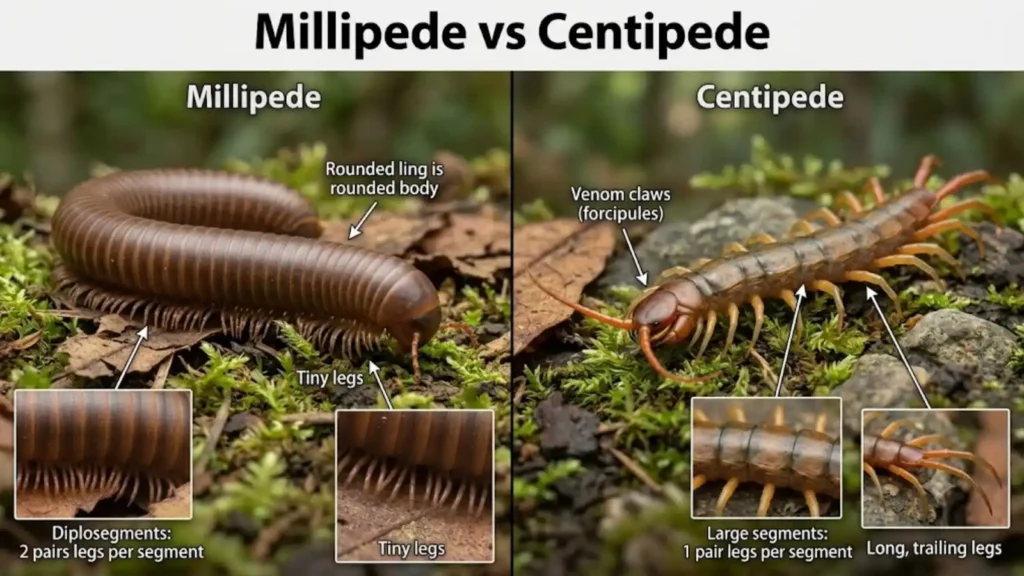
Millipede vs Centipede
Millipedes and centipedes are often confused because they share long, segmented bodies and many legs. However, they are completely different creatures with unique behaviors, diets, and survival strategies. While millipedes are slow-moving decomposers that feed on decaying plants, centipedes are fast predators equipped with venomous claws for hunting insects and other small animals.
Understanding the difference between these two arthropods helps homeowners identify harmless visitors and recognize species that should be handled carefully. This guide explores every major difference between millipede vs centipede, including their bites, legs, size, habitat, poison, pronunciation, and even who would win in a fight.
RELATED: Wildlife Photography Internship
Quick Comparison: Millipede vs Centipede
| Feature | Millipede | Centipede |
|---|---|---|
| Body Shape | Round, cylindrical | Flat and elongated |
| Legs | Two pairs per body segment | One pair per body segment |
| Speed | Slow | Very fast |
| Diet | Decaying plants and fungi | Insects and small animals |
| Defense | Curls into a spiral, releases chemicals | Bites using venom claws |
| Bite | Rare and harmless | Painful but usually not dangerous |
| Habitat | Moist soil, leaf litter | Under rocks, logs, basements |
| Role | Decomposer | Predator |
Millipede vs Centipede Bite
One of the biggest concerns people have is whether these creatures bite humans.
Millipede Bite
Millipedes rarely bite because they are not aggressive. Instead of attacking, they protect themselves by curling into a tight spiral. Some species release defensive chemicals that may cause mild skin irritation or discoloration if touched.
Millipede bites are extremely uncommon and usually not medically significant.
Centipede Bite
Centipedes can bite when threatened or handled. They use modified front legs called forcipules, which inject venom into prey.
A centipede bite may cause:
- Sharp pain
- Swelling
- Redness
- Temporary numbness
Most healthy adults recover within a few hours or days. Severe allergic reactions are rare but require immediate medical attention.
Winner for safety: Millipede
Millipede vs Centipede Legs
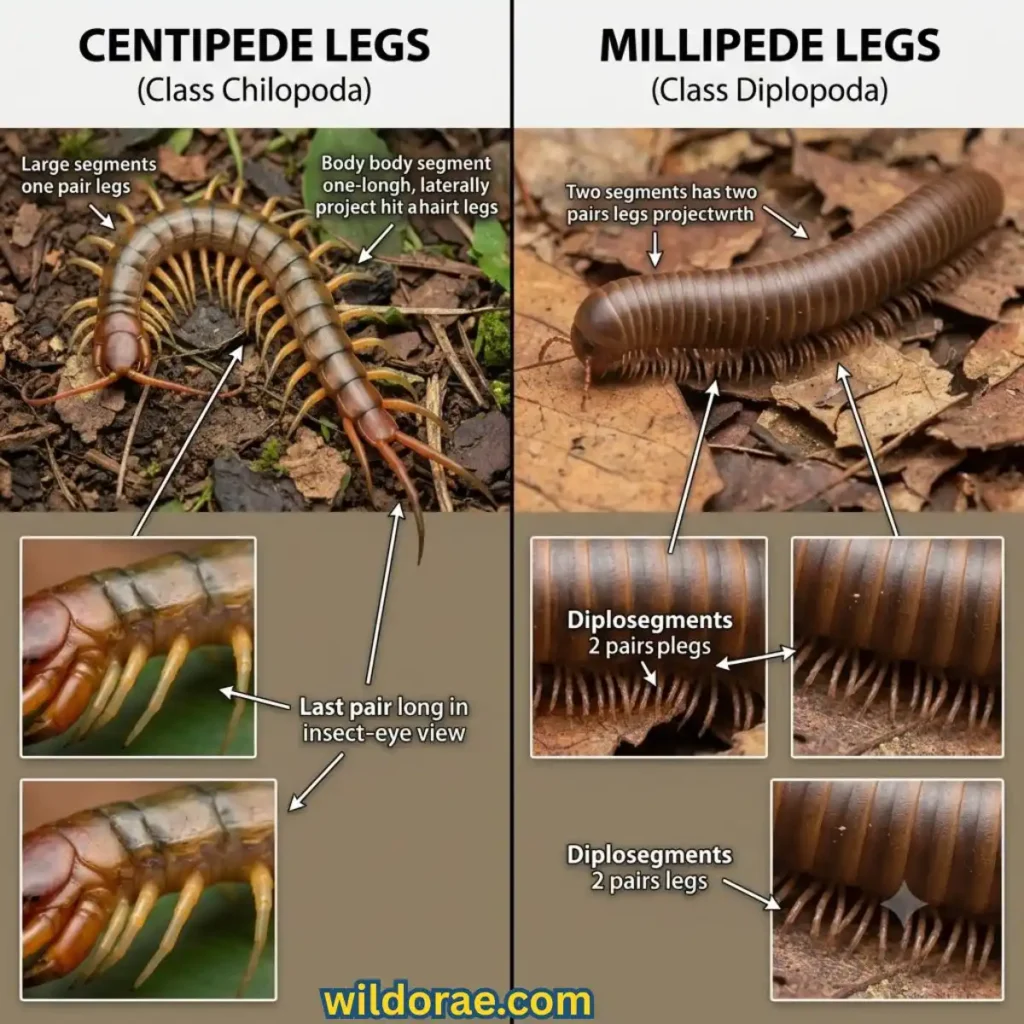
The easiest way to tell these animals apart is by counting their legs.
Millipede Legs
Millipedes have:
- Two pairs of legs per body segment
- Short legs positioned underneath the body
- A slow, wave-like walking motion
Although the name means “thousand feet,” no millipede actually has 1,000 legs. The record holder has over 1,300 legs, but most species have between 80 and 400.
Centipede Legs
Centipedes have:
- One pair of legs per body segment
- Long legs extending outward
- Excellent speed and agility
Their long legs help them chase insects and escape predators quickly.
Easy identification tip:
- Legs hidden beneath body = Millipede
- Legs sticking out from sides = Centipede
Millipede vs Centipede in House
Finding either creature inside your home can be surprising.
Why Millipedes Enter Houses
Millipedes usually come indoors because:
- Heavy rain floods their habitat
- Soil becomes too dry
- They seek moisture
Common hiding places include:
- Bathrooms
- Basements
- Laundry rooms
- Garages
Millipedes cannot damage furniture or food.
Why Centipedes Enter Houses
House centipedes actively hunt insects such as:
- Cockroaches
- Silverfish
- Ants
- Spiders
- Bed bugs
Although many people dislike seeing them, centipedes actually help reduce indoor pest populations.
If you frequently find centipedes indoors, it may indicate another insect infestation.
Millipede vs Centipede Poisonous
Many people ask whether these arthropods are poisonous.
Are Millipedes Poisonous?
Millipedes are not poisonous in the traditional sense. However, some species release defensive chemicals that discourage predators.
These secretions may:
- Irritate sensitive skin
- Cause temporary burning
- Stain the skin
They do not inject venom.
Are Centipedes Poisonous?
Centipedes are actually venomous, not poisonous.
Their venom helps them:
- Capture prey
- Defend themselves
- Immobilize insects
Most species pose little danger to humans, although large tropical centipedes deliver much more painful bites.
Millipede vs Centipede Size
These animals vary greatly in size depending on species.
Millipede Size
Most millipedes measure:
- 1–4 inches (2.5–10 cm)
Some giant tropical species grow over:
- 12 inches (30 cm)
They have thick, rounded bodies.
Centipede Size
Most centipedes range between:
- 1–6 inches (2.5–15 cm)
Large tropical species can exceed:
- 12 inches (30 cm)
Their flattened bodies allow them to squeeze into narrow spaces while hunting.
Although similar in length, centipedes appear thinner because of their flattened bodies.
Millipede vs Centipede Who Would Win
If these two animals encountered one another, the outcome would heavily favor the centipede.
Why the Centipede Wins
Centipedes possess several advantages:
- Venomous claws
- Faster movement
- Hunting instincts
- Better eyesight
- Powerful jaws
Millipedes rely on defensive strategies rather than combat.
Their defense includes:
- Curling into a spiral
- Hard exoskeleton
- Chemical secretions
Against small predators, these defenses work well. However, many larger centipedes can overcome them.
Winner: Centipede
Millipede vs Centipede Pronunciation
Millipede vs Centipede (MIL-uh-peed vs SEN-tuh-peed)
Many readers are unsure how to pronounce these words.
- Millipede: MIL-uh-peed
- Centipede: SEN-tuh-peed
Both words originate from Latin.
- Milli means “thousand.”
- Centi means “hundred.”
- Pede means “foot.”
Interestingly,
Neither animal actually has exactly one hundred or one thousand legs.
Millipede vs Centipede vs Silverfish
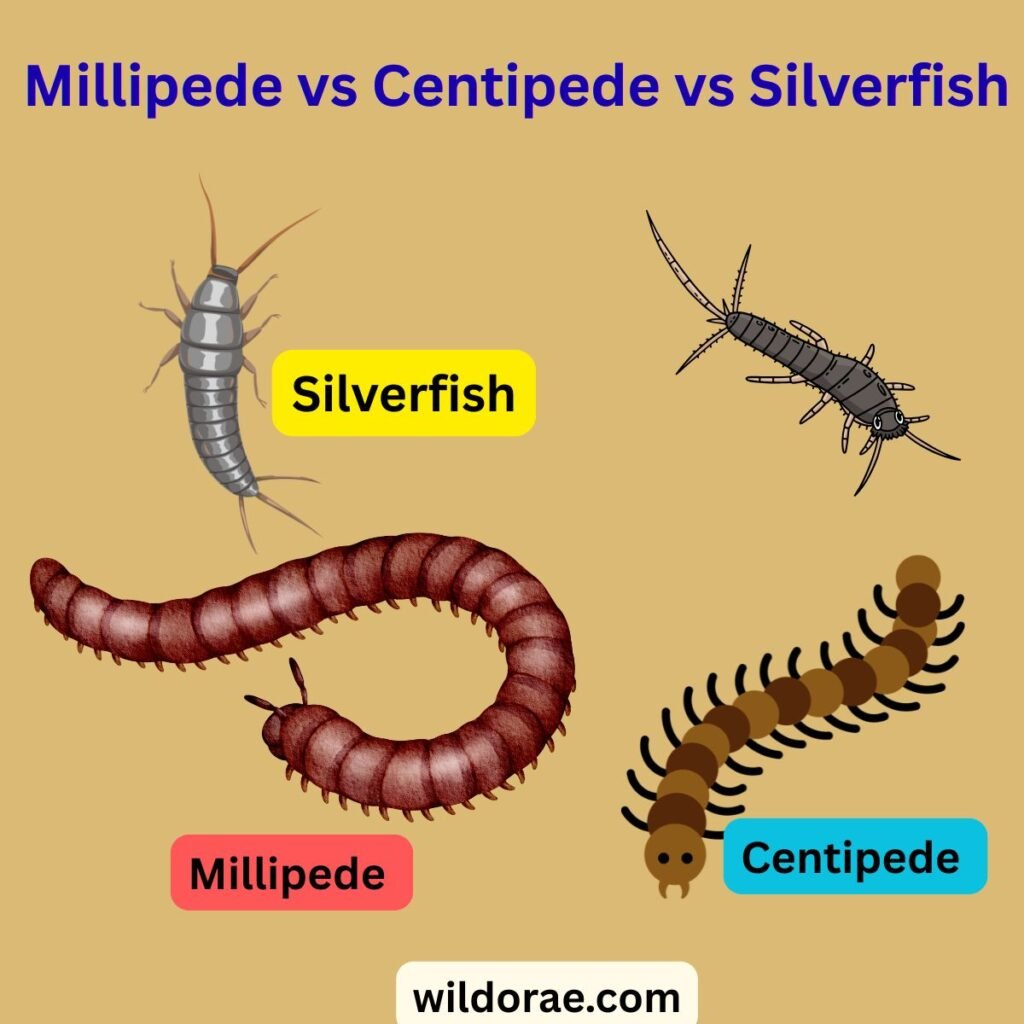
Silverfish are another common household arthropod that people often confuse with young centipedes.
Silverfish
Characteristics include:
- Wingless insect
- Six legs
- Silver-gray color
- Fish-like movement
- Eats paper, glue, books, and starch
Millipede
- Many legs
- Cylindrical body
- Plant decomposer
- Harmless to humans
Centipede
- Fast predator
- Venomous bite
- Flat body
- Controls household insects
| Feature | Millipede | Centipede | Silverfish |
|---|---|---|---|
| Type | Myriapod | Myriapod | Insect |
| Legs | Many | Many | Six |
| Diet | Dead plants | Live insects | Paper and starch |
| Speed | Slow | Fast | Fast |
| Bite | Rare | Yes | No |
| Home Damage | None | None | Can damage books and paper |
How to Identify Them Quickly
If you only have a few seconds to identify the creature, remember these clues:
Millipede
- Round body
- Slow movement
- Two pairs of legs per segment
- Curls into a ball
- Found in damp gardens
Centipede
- Flat body
- Very fast runner
- One pair of legs per segment
- Venomous claws
- Hunts insects
Silverfish
- Six legs
- Fish-shaped body
- Silver scales
- Runs rapidly across floors
Are They Beneficial?
Both millipedes and centipedes play valuable roles in ecosystems.
Benefits of Millipedes
- Recycle dead leaves
- Improve soil fertility
- Support healthy forests
- Speed up decomposition
Benefits of Centipedes
- Natural pest control
- Reduce cockroach populations
- Eat termites and ants
- Maintain ecological balance
Although many homeowners dislike seeing them, both species contribute positively to nature.
Frequently Asked Questions
Q1. Are millipedes dangerous?
No. Millipedes are harmless and rarely cause anything more than mild skin irritation from their defensive secretions.
Q2. Can centipedes kill humans?
No. Most centipede bites are painful but not life-threatening. Serious complications are uncommon.
Q4.Why do millipedes curl into a ball?
Curling protects their soft underside and helps shield them from predators.
Q5.Which has more legs?
Millipedes have significantly more legs because they possess two pairs per body segment, while centipedes have only one pair.
Q6.Should I remove centipedes from my house?
Centipedes help control pests, but if you see many of them, reducing moisture and sealing entry points can help keep them outside.
Final Thoughts
The debate over millipede vs centipede comes down to understanding their very different lifestyles. Millipedes are peaceful decomposers that recycle organic matter and rarely interact with humans, while centipedes are active predators that use venom to hunt insects. Differences in their legs, body shape, speed, diet, and defense mechanisms make identification relatively easy once you know what to look for.
Whether you encounter one in your garden, basement, or while exploring wildlife, recognizing these fascinating arthropods helps you appreciate their important roles in nature rather than fear them.